
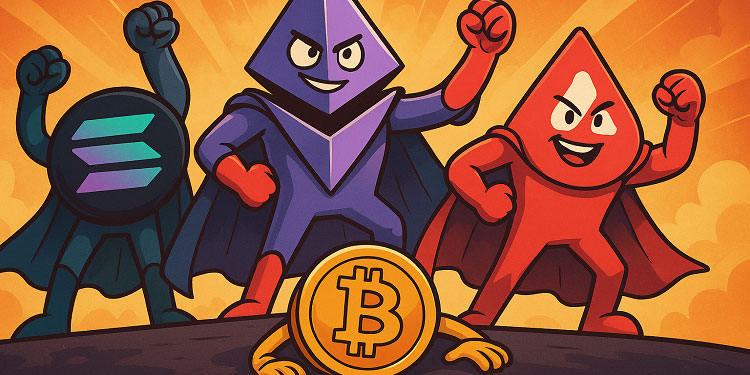
Bitcoin started the digital currency revolution and captured global attention by embedding itself as “digital gold.” However, its dominance comes with drawbacks: slow transaction speeds, high fees at peak demand, and a relatively rigid protocol that limits on-chain programmability. The altcoins, on the other hand, are built on blockchain lessons learned from Bitcoin to deliver faster settlements, lower costs, and entirely new use cases.
Altcoins power smart-contract platforms and decentralized applications (dApps), and unlock DeFi, NFTs, and Web3 gaming. Not only this, but for the investors who want to cultivate faster returns, Bitcoin going 2x seems unreal; however, many altcoins can double their price (and investment) in no time. Our analysts shortlisted 3 altcoins which are better than Bitcoin.
3 Altcoins better than Bitcoin:
1. Ethereum (ETH)
Ethereum revolutionized blockchain by introducing smart contracts, self-executing code that runs exactly as programmed. Since launching in 2015, it has become the premier platform for:
- Decentralized Finance (DeFi). Lending, borrowing, and yield-farming protocols collectively lock tens of billions in value on Ethereum’s chain.
- Non-Fungible Tokens (NFTs). From digital art to in-game items, Ethereum’s ERC-721 and ERC-1155 standards power most NFT projects.
- Developer Ecosystem. Tens of thousands of developers build on Ethereum, fueling ongoing upgrades like sharding and layer-2 rollups to tackle scalability and cost.
With its “merge” to a proof-of-stake consensus and a roadmap toward even greater throughput, Ethereum combines first-mover advantage with an upgraded path, making it a prime candidate for anyone seeking more than just Bitcoin’s store-of-value play.

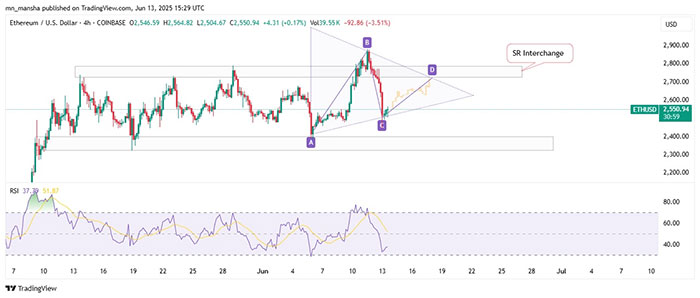
The price of Ethereum is currently under a quick correction after gaining over 55% in the last 40 days. The bounce off from the resistance was after Ethereum recorded a breakout from the $2780 price mark. In the short term, Ethereum price is expected to show a bullish reversal to $2745 and reach the Support-Resistance (S-R) Interchange level. If the price breaks above this level, it can target $3,000 within days.
2. Solana (SOL)
Solana offers lightning-fast transaction speeds while keeping network fees at a tiny fraction of a cent. Its proof-of-history consensus mechanism timestamps events before they enter the proof-of-stake layer, and enables nodes to agree on ordering without extensive communication. That design makes Solana an attractive home for decentralized exchanges, NFT marketplaces, and real-time gaming applications.
- Scalability. Solana’s architecture avoids the typical trade-off between security and throughput.
- Low Fees. During periods of moderate traffic, users pay mere pennies per transaction.
- Ecosystem Growth. Projects like Serum (a high-speed DEX) and Star Atlas (a blockchain MMO) showcase Solana’s versatility.
Developers appreciate Solana’s Rust- and C-based smart-contract environment, which parallels the performance mindset found in traditional software engineering. Despite occasional network congestion episodes, Solana’s ongoing upgrades encourage validator reliability and introduce archivers that offload historical data, further reducing overhead.
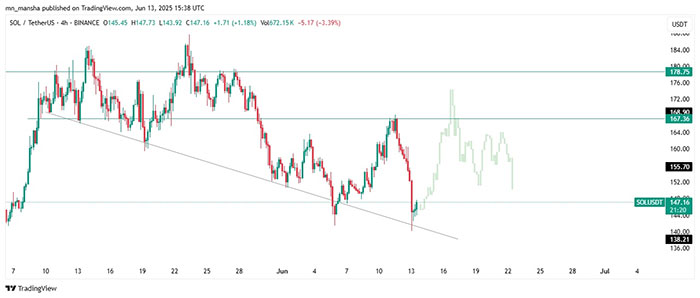
Solana is known for its crazy gains and massive price volatility. Currently, the price of Solana is sliding downwards on a descending trendline support. Since the Solana price has recently reached its lower resistance, Solana is expected to bounce off around 15%. The major resistance for Solana in the short term is $180.
3. Avalanche (AVAX)
Avalanche differentiates itself with its three-chain architecture: X-Chain for asset creation, P-Chain for coordination and staking, and C-Chain for EVM-compatible smart contracts. That modular setup lets Avalanche process thousands of transactions per second without sacrificing decentralization. Its native token, AVAX, secures the network through staking, pays for gas fees, and caps the total supply at 720 million.
- EVM Compatibility. Easy porting of Ethereum dApps to Avalanche reduces development friction.
- Subnets. Custom blockchains called subnets let enterprises or communities launch tailored networks under Avalanche’s security umbrella.
- Fast Finality. Transactions reach finality in under two seconds, an order of magnitude quicker than many other layer-1 platforms.
With its user-friendly tooling, growing DeFi hub (including Trader Joe and Benqi), and emphasis on low barriers to entry for subnet creation, Avalanche stands out as a strong choice for projects demanding both performance and customization.
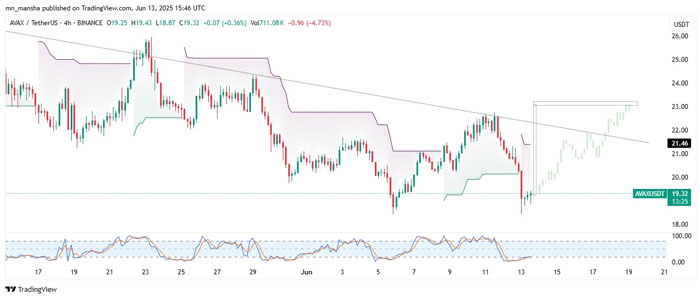
By balancing speed, cost, and programmability, Solana and Avalanche each push blockchain innovation beyond Bitcoin’s original design. AVAX has been drowning since its all-time high of $55 in December. In short, the price is moving in a bearish direction, making lower lows and lower highs. However, since the price is near its support zone, AVAX could potentially return 15% to 21%, as indicated by the oversold stochastic indicator.