
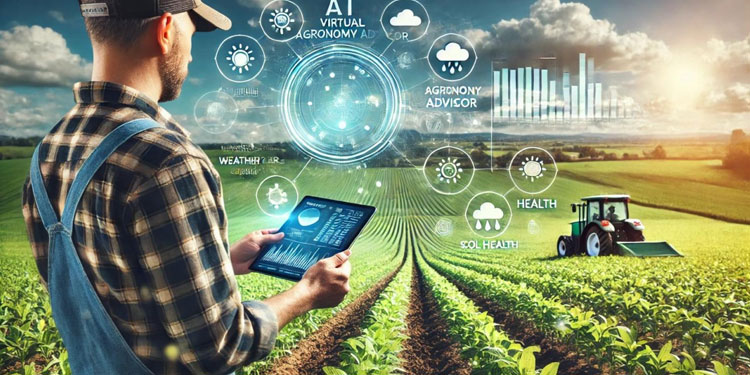
A research collaboration between Jagannath University in India and the University of New South Wales has introduced a comprehensive technological framework designed to revolutionize agricultural forecasting. This newly proposed system combines Internet of Things (IoT) devices, machine learning models, and blockchain infrastructure to produce highly accurate, secure, and transparent crop forecasts. The study, published in May 2025 on arXiv, lays the groundwork for a significant leap in smart farming and sustainable agriculture.
At the core of this innovation lies a machine learning engine trained on an agricultural dataset comprising 2,200 data points across seven critical environmental indicators—namely nitrogen, phosphorus, potassium, temperature, humidity, pH level, and rainfall. These parameters are fundamental to determining both optimal crop choices and projected yields. Researchers tested multiple algorithms, including Support Vector Machines, Decision Trees, Naive Bayes, Logistic Regression, Neural Networks, and K-Nearest Neighbors. The Random Forest model, an ensemble method known for robustness and flexibility, achieved the highest accuracy rate at 99.45%, outperforming its counterparts on precision and recall metrics.
Dynamic Multi-Crop Forecasting for Real-World Flexibility
Unlike conventional forecasting models that suggest a single crop based on static data, this framework introduces multi-crop forecasting capabilities. The system not only predicts the most suitable crop under current environmental conditions but also generates a ranked list of viable alternatives, offering flexibility for farmers based on market conditions, input availability, and risk diversification strategies. This adaptability makes it especially useful in regions where sudden climate shifts or pest outbreaks are frequent.
The predictive component is further enhanced by real-time data integration, allowing the model to adjust continuously as new environmental readings are gathered. This dynamic feedback loop improves responsiveness to unpredictable challenges in agriculture, a limitation often faced by traditional forecasting systems based solely on historical data.
Blockchain Adds Trust and Transparency to Farming Decisions
To ensure the authenticity and immutability of the data used in predictions, the researchers embedded the system into the Ethereum blockchain. Through the use of smart contracts written in Solidity and executed on platforms like MetaMask and Ganache, the framework secures every data transaction—from sensor input to forecast output—on a decentralized ledger. Once recorded, data cannot be altered or deleted, offering a reliable audit trail for all stakeholders, including farmers, policymakers, and agribusinesses.
This security layer addresses long-standing concerns about data tampering in agricultural reporting, especially in regions where manipulation has historically influenced policy or market decisions. With blockchain-backed forecasts, farmers may also gain stronger negotiating positions in supply chains or insurance discussions, due to access to verifiable, timestamped predictions.
User-Friendly Access Meets Industry 5.0 Standards
To enhance accessibility, the platform includes a web-based interface developed using Django. Through this portal, users can input field data, monitor current environmental readings, and access forecast results with the corresponding blockchain entries. The system balances ease of use with advanced backend security, making it a model for the next generation of digital agriculture platforms aligned with Industry 5.0 principles.
Toward a More Sustainable and Scalable Future
The researchers believe the system’s potential economic and operational impact on farmers could be profound. With real-time and accurate forecasts, resource usage such as water, fertilizer, and pesticides can be optimized, reducing both cost and environmental footprint. The model also serves as a platform for future expansion. Recommendations include integrating market price data, pest activity reports, and personalized AI-driven insights. They also advocate for exploring alternative blockchain solutions such as Polygon or Hyperledger to improve scalability and reduce transaction costs.
Overall, this triad-powered framework is positioned not just as an incremental improvement, but as a transformative model capable of reshaping how the global agricultural sector approaches forecasting, resource planning, and transparency.