
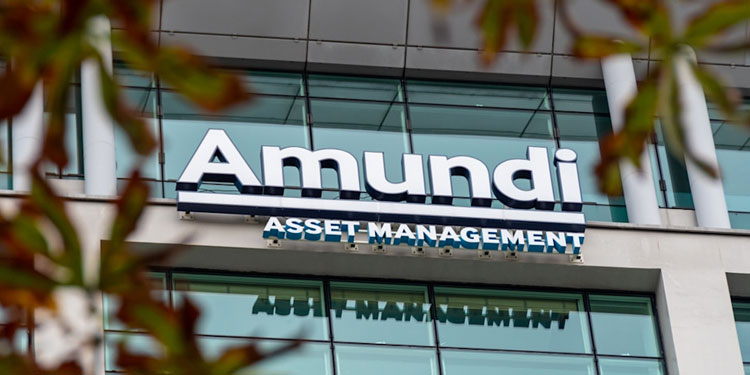
Amundi has expanded its presence in digital finance by unveiling a tokenized version of its primary euro money market fund, marking what industry observers view as a significant milestone in the ongoing integration of blockchain technology into traditional asset management. The initiative results from a collaboration with asset-servicing provider CACEIS and offers investors a hybrid structure that allows them to select either a conventional investment route or a blockchain-based token format.
The tokenized edition of the AMUNDI FUNDS CASH EUR money market fund functions on the public Ethereum blockchain, using distributed ledger technology to enhance the transparency and traceability of every transaction. The first tokenized transaction was recorded on November 4, signaling the beginning of the fund’s on-chain lifecycle.
Building the Technical Foundation Through CACEIS
CACEIS supports the technological infrastructure behind the tokenized fund, managing key components such as the tokenization framework, digital wallets for investors, and a blockchain-ready platform capable of handling subscription and redemption activities. The service provider is positioned as a central player in ensuring the system operates efficiently on-chain while integrating smoothly with traditional investment workflows.
Amundi’s Head of Institutional and Corporate Clients and ESG, Jean-Jacques Barbéris, noted that tokenization has become a global phenomenon and conveyed that this launch demonstrates Amundi’s ability to adopt emerging digital solutions while maintaining operational rigor. He also indicated that the firm intends to continue expanding its tokenization initiatives with a strong focus on security and scalability.
Why Tokenization Holds Value for Investors
The transition to tokenized fund structures is viewed as a major shift in how investors interact with money market instruments. The blockchain-enabled model is designed to deliver several advantages, including near-instant settlement of transactions, a more accessible pathway for younger and digitally oriented investors, continuous availability for trading and fund administration, and future compatibility with stablecoins and central bank digital currencies.
CACEIS CEO Jean-Pierre Michalowski described the hybrid transfer agent system as a way to provide clients with an additional distribution channel supported by blockchain technology. He indicated that the launch represents a crucial move toward enabling continuous fund services around the clock and setting the groundwork for future payment connections involving electronic money tokens and CBDCs.
Tokenized Funds Gain Momentum Across the Industry
Amundi’s entry into tokenized assets arrives during a period of rapid growth in blockchain-based money market funds. Data from RWA.xyz shows substantial expansion in the sector, with BlackRock’s tokenized money market fund accumulating approximately $2.3 billion in digital assets, while Franklin Templeton’s equivalent product has surpassed $826 million. The total value locked in tokenized funds has surged from $770 million in 2022 to $9 billion by October 2025, reflecting rising institutional and retail interest.
Both BlackRock and Franklin Templeton have diversified their tokenized offerings across multiple blockchains, underscoring the market’s confidence in the technology’s adaptability and long-term viability.
Despite this momentum, the Bank for International Settlements recently raised concerns about tokenized Treasury products. In a bulletin, the institution highlighted potential operational and liquidity risks if such assets are widely used as collateral, suggesting that rapid growth should be accompanied by careful monitoring and regulatory preparedness.
Amundi’s new tokenized fund is seen as a step toward modernizing traditional finance by integrating blockchain efficiency with established investment structures. As major asset managers continue to expand their tokenization strategies, the trend is expected to reshape global fund distribution and accelerate the adoption of digital asset technologies across the financial sector.