
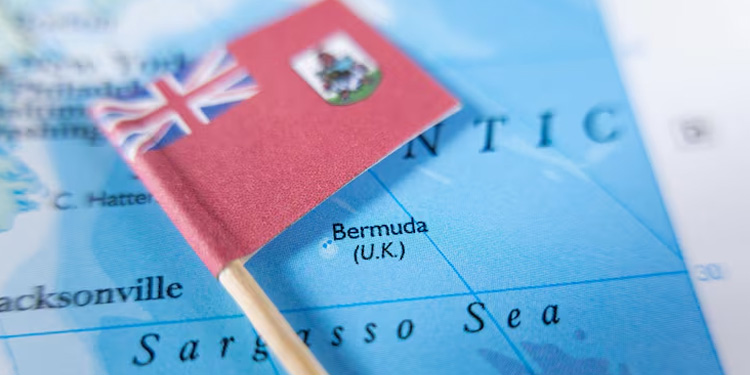
Bermuda has outlined plans to place blockchain infrastructure at the core of its national economy, signaling an ambitious move toward what officials describe as a fully on-chain financial system. The strategy is being developed through partnerships with cryptocurrency exchange Coinbase and stablecoin issuer Circle, with the objective of integrating digital assets into everyday payments, financial services, and certain government operations.
The initiative was presented at the World Economic Forum Annual Meeting in Davos, where executives from Coinbase and Circle joined Bermuda Premier David Burt to explain how blockchain-based tools could be embedded across the country’s financial landscape. The proposal reflects Bermuda’s long-term effort to modernize its financial infrastructure and reduce reliance on traditional banking rails that have proven costly and inefficient for a small island economy.
Addressing Structural Banking Challenges
Bermuda, home to roughly 65,000 residents, has faced persistent challenges common across many Caribbean jurisdictions. Merchants and financial institutions often encounter high transaction fees, limited access to onshore banking partners, and slow settlement times. These issues are largely attributed to de-risking by global banks, which has constrained access to correspondent banking services.
Government officials have indicated that these frictions have weighed heavily on competitiveness and profit margins, particularly for small and medium-sized enterprises. By shifting toward blockchain-based settlement and dollar-denominated stablecoins, Bermuda aims to bypass some of these constraints and improve efficiency across the domestic economy.
Stablecoins and Base Infrastructure at the Core
Under the proposed framework, Bermuda will collaborate with Circle to use the USDC stablecoin and with Coinbase to leverage its Base blockchain infrastructure. The initial phase of the project focuses on piloting stablecoin-based payments across government agencies, financial institutions, and local businesses.
In addition to payments, the plan includes tokenization tools for financial institutions and nationwide digital finance education programs. These initiatives are intended to help residents understand how digital financial products work and how they can be used safely in daily transactions. The government has emphasized that the broader goal is to ensure Bermudians benefit directly from ongoing changes in the global financial system.
We’re taking Bermuda’s economy onchain@BermudaPremier @jerallaire https://t.co/lDqFUIb9qe pic.twitter.com/QGLzaI5VNw
— Brian Armstrong (@brian_armstrong) January 19, 2026
Building on a Strong Regulatory Foundation
The announcement builds on groundwork established several years earlier. In 2018, Bermuda introduced the Digital Asset Business Act, placing digital asset activities under the supervision of the Bermuda Monetary Authority. Since then, more than 40 digital asset firms have been licensed or admitted into regulatory sandboxes.
Coinbase and Circle were among the earliest global firms approved under this framework. Coinbase currently operates a derivatives platform from Bermuda for non-U.S. users, reinforcing the island’s role as a regulated hub for digital asset innovation.
Early Experiments and Growing Momentum
Momentum increased in 2025 during the Bermuda Digital Finance Forum, where the government, Coinbase, and Circle tested real-world adoption through an on-chain USDC distribution. Participants received USDC that could be spent with newly onboarded local merchants. Officials later reported that the pilot encouraged more businesses to accept digital payments and prompted deeper engagement from local financial institutions.
These efforts are expected to expand at the Bermuda Digital Finance Forum 2026, scheduled for May, with broader participation from businesses and a larger consumer-focused stimulus component.
Voluntary Adoption and Compliance-First Approach
USDC plays a central role in the strategy due to its dollar-backed reserves, which allow merchants to accept fast, low-cost digital payments without exposure to the price volatility associated with assets like Bitcoin. Some Bermudian companies are already using USDC for payments, and policymakers view it as a way to modernize transactions while maintaining alignment with the U.S. dollar.
The government has clarified that participation in the on-chain framework will remain voluntary, with no requirement for residents or businesses to use blockchain tools. Partnerships with Coinbase and Circle are also non-exclusive, reflecting an incremental transition supported by education and incentives rather than mandates.
Bermuda’s broader appeal is reinforced by its tax-neutral stance on digital assets, with no income or capital gains tax, alongside a compliance-focused regulatory model that emphasizes licensing, audits, and reserve requirements. Officials believe this balanced approach can strengthen the island’s financial position while opening greater access to global capital markets for local firms.