
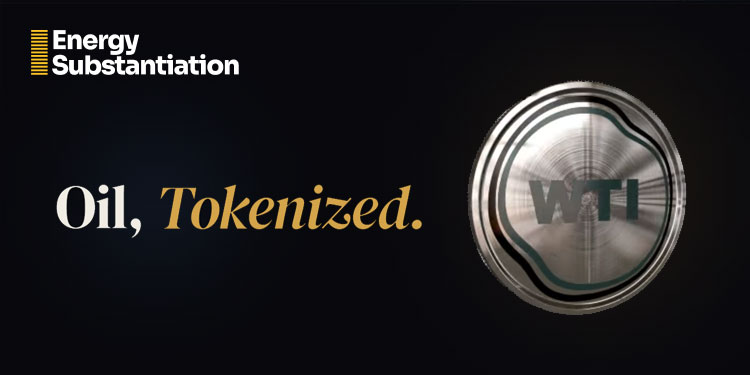
A California-based startup is entering the growing real-world asset tokenization market with the launch of $WTIC, an Ethereum-based ERC-20 token backed on a one-to-one basis by physical barrels of West Texas Intermediate (WTI) crude oil. Developed by Larkspur-based Energy Substantiation Partners, the project is designed to offer investors direct exposure to oil prices without relying on traditional futures contracts or commodity exchange-traded funds.
The company stated that each $WTIC token represents one barrel of physical WTI crude supported by independently verified Volumetric Energy Receipts. These receipts are held by an independent custodian and undergo monthly audits to verify the underlying assets. Unlike conventional stablecoins that are pegged to fiat currencies such as the U.S. dollar, the token is linked directly to the value of physical crude oil.
According to the company, minting a $WTIC token requires users to deposit USDC and pay a 0.10% minting fee. Token holders are able to redeem their holdings on a daily basis either for USDC or, subject to applicable requirements, physical delivery of crude oil. The startup added that the token’s value is tied to the daily WTI benchmark and is designed to closely track the underlying commodity price.
By backing the token with physical crude instead of futures contracts, the company aims to eliminate rollover costs and tracking errors commonly associated with oil exchange-traded funds, while enabling around-the-clock trading on the Ethereum blockchain.
Traditional oil investment vehicles often rely on futures contracts that must be rolled over as they approach expiration. This process can create additional costs and cause the investment’s performance to diverge from the spot price of crude oil. Energy Substantiation Partners believes that using physical inventories as collateral can reduce these inefficiencies while allowing investors to trade at any time, including outside the operating hours of traditional commodity exchanges.
The project is led by Chief Executive Officer JP Thieriot and Executive Chair Donald Putnam. The leadership team also includes Wil Harris, Lucas Harris, Chris Ericksen, and Katie Oates.
The company’s governance structure has drawn public attention because Texas Railroad Commissioner Wayne Christian serves on its board of directors. Although the Texas Railroad Commission primarily regulates the state’s oil and gas industry, observers have raised questions regarding potential conflicts of interest due to Christian’s simultaneous role as a state regulator and board member of a company involved in tokenizing oil assets. Public scrutiny surrounding this dual position increased during 2026, particularly because Texas remains the largest crude oil-producing state in the United States and the commission oversees permitting, production, and environmental compliance.
Energy Substantiation Partners is entering a rapidly expanding segment of the blockchain industry. Real-world asset tokenization has gained momentum as financial institutions increasingly move traditional assets onto blockchain networks. Several major firms have already introduced tokenized versions of government securities and other financial instruments, reflecting broader institutional interest in blockchain-based asset management.
The company said its verification framework, which combines independently audited Volumetric Energy Receipts with third-party custodians, is intended to provide transparency while allowing energy producers to monetize inventories without disrupting normal operations.
The startup has also outlined plans to expand beyond crude oil. Its product roadmap includes the launch of HHC, a token backed by Henry Hub natural gas, and BRNTc, a token linked to Brent crude oil, with both expected during the third quarter of 2026.
In addition, the company stated that it has implemented compliance measures including sanctions screening procedures and comprehensive audit trails. These controls are intended to support regulatory compliance as tokenized commodity markets continue to develop.
Beyond crude oil, the company plans to broaden its tokenized energy portfolio with natural gas and Brent crude-backed digital assets, signaling an expansion of blockchain-based commodity investing into multiple segments of the global energy market.
While the token’s physical backing may reduce some of the pricing distortions associated with futures-based products, its redemption framework could face significant scrutiny during periods of extreme market volatility. Market participants are expected to closely monitor how the platform performs under stressed conditions as tokenized commodities become an increasingly prominent segment of digital finance.