
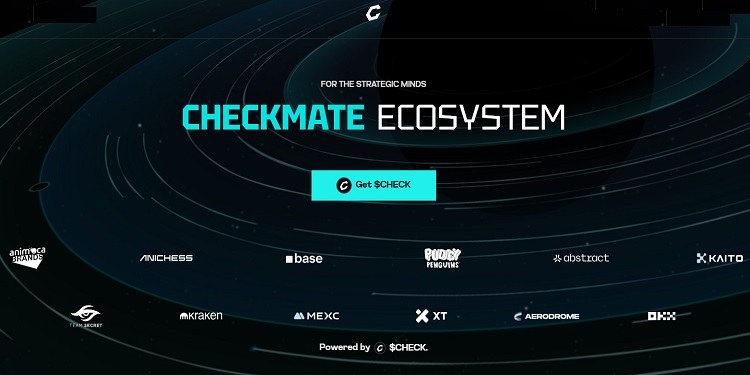
Checkmate Ecosystem, a community-owned Web3 gaming platform known for titles such as Anichess, has announced a strategic partnership with Team Secret, one of the most recognized organizations in global esports. The collaboration marks a significant step toward deeper integration between professional competitive gaming and decentralized technologies. Through this alliance, the two entities aim to establish a unified infrastructure where the CHECK token functions as a core utility asset across Web3 gaming experiences.
The announcement was shared by Checkmate Ecosystem through its official communication channels, highlighting its intention to position CHECK as a foundational token for participation, access, and rewards within blockchain-based games. The initiative reflects a broader effort to merge traditional esports structures with decentralized ownership and token-driven ecosystems.
The Role of Checkmate Ecosystem in Web3 Gaming
The Checkmate Ecosystem derives its identity from the strategic concept of checkmate in chess, a situation where an opponent has no remaining moves to escape defeat. This philosophy underpins its flagship Web3 game, Anichess, which emphasizes skill-based competition and strategic depth. Within this ecosystem, the CHECK token operates as a native digital asset designed to support gameplay participation and serve as an alternative payment mechanism.
According to the platform’s positioning, CHECK enables players and community members to engage directly with Web3 gaming mechanics, including competitive entry and ecosystem participation. By structuring its economy around a single utility token, Checkmate Ecosystem aims to create a streamlined and transparent environment that aligns incentives among players, developers, and fans.
Team Secret’s Entry Into Web3 Infrastructure
Team Secret brings more than a decade of experience in top-tier esports competition, having maintained a strong presence across multiple major gaming titles for over 12 years. Through this partnership, the organization is extending its brand into the decentralized gaming space while maintaining its competitive legacy. The integration introduces CHECK as an entry token for several key functions, including competitive access, NFT-based memberships, and tokenized reward systems.
Esports x $CHECK
Team Secret competes at the highest level across multiple top titles for over 12 years.
They’re joining the Checkmate Ecosystem.$CHECK, the Strategy Token, will be used as a payment and participation token
→ membership NFTs
→ tokenized rewards
→… https://t.co/qW9Z7hU65a— Checkmate Ecosystem (@CheckmateFDN) January 12, 2026
As part of the collaboration, Team Secret plans to introduce a Web3 Membership NFT Pass. This pass is expected to grant holders access to a broader competitive ecosystem powered by the CHECK token. The model is designed to cater to a high-skill, high-stakes environment, appealing to professional teams, individual players, and dedicated fans seeking deeper engagement.
Enhancing Access and Utility Through Tokenization
One of the primary objectives of the partnership is to simplify access to Web3 gaming for users. By integrating Team Secret’s competitive framework with Checkmate Ecosystem’s blockchain infrastructure, participants can enter the decentralized gaming environment more seamlessly. The CHECK token is positioned to support multiple use cases, including NFT membership access, competitive participation, and the distribution of performance-based rewards.
This multi-functional approach is intended to reduce fragmentation within Web3 gaming ecosystems. Instead of relying on separate systems for access, rewards, and identity, the CHECK token serves as a unifying layer that connects these elements. For users, this translates into a more cohesive experience that blends competitive gaming with decentralized ownership.
Building a Bridge Between Esports and Web3
The alliance between Checkmate Ecosystem and Team Secret is widely viewed as a step toward redefining how professional gaming interacts with blockchain technology. By aligning an established esports brand with a Web3-native gaming platform, the partnership creates a bridge between traditional competitive gaming and next-generation decentralized infrastructure.
Industry observers suggest that this integration could encourage broader adoption of Web3 gaming by leveraging the credibility and fan base of established esports organizations. In doing so, the collaboration aims to demonstrate how tokenized systems and NFTs can coexist with professional competition, ultimately contributing to the evolution of Web3 gaming infrastructure and its role in the future of esports.