
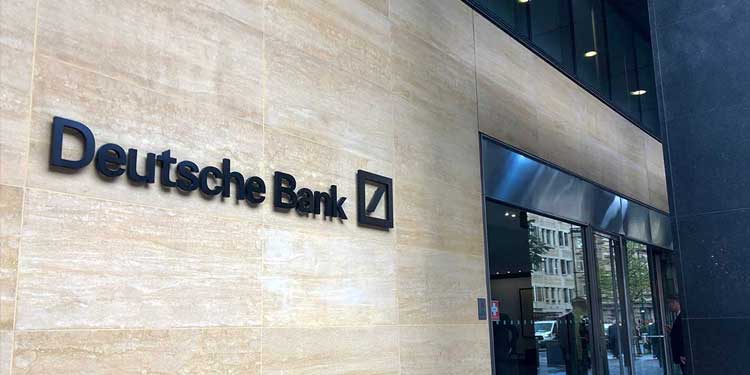
Deutsche Bank has selected the Crypto Carbon Ratings Institute (CCRI) to provide sustainability indicators for crypto assets as the German banking group prepares to expand its regulated digital asset custody services in Europe.
The selection comes as the European Union’s Markets in Crypto-Assets Regulation (MiCA) requires crypto-asset service providers (CASPs) to disclose sustainability-related information about the assets they support. CCRI provides these metrics to financial institutions, exchanges and token issuers using a database covering more than 1,000 crypto assets.
CCRI will supply Deutsche Bank with MiCA-compliant sustainability indicators covering energy consumption, renewable energy usage, energy intensity and greenhouse gas emissions, supporting the bank’s regulatory reporting requirements as it enters the crypto custody market.
The institute documents its data sources and assessment methodologies to help service providers meet disclosure requirements under the European regulatory framework. Its reporting also includes Scope 1 and Scope 2 emissions, allowing institutions to evaluate the environmental impact associated with supported digital assets.
Sustainability Reporting for Deutsche Bank’s Crypto Custody Business
CCRI announced the selection as Deutsche Bank advances its digital asset custody and transfer services for institutional and corporate clients in Europe.
Deutsche Bank’s entry in the MiCA register for crypto custody and transfer services is dated October 12, 2026, and identifies Germany’s financial regulator, BaFin, as its supervisory authority. The registration currently indicates authorization for Germany, with no additional EU member states listed as notified jurisdictions.
CCRI’s sustainability analytics extend beyond network-level assessments, allowing environmental indicators and carbon emissions to be attributed to individual user activities, tokens, Layer 2 networks, rollups, and non-fungible tokens (NFTs).
Deutsche Bank announced in September 2026 that it planned to introduce regulated digital asset custody services for institutional and corporate customers across Europe. The service’s technical architecture is being supported by Bitpanda, while Taurus is providing secure digital asset storage infrastructure.
The planned offering is expected to support cryptocurrencies including Bitcoin and Ether, with the bank reportedly anticipating onboarding its first clients before the end of 2026.
Deutsche Bank’s Journey Toward Digital Asset Custody
Deutsche Bank‘s efforts to establish crypto custody capabilities date back to 2023, when it applied to BaFin for a crypto custody license and partnered with Taurus to develop the underlying infrastructure.
The bank has since continued building its digital asset capabilities, with custody services representing its initial entry point into the regulated crypto market. Depending on client demand and internal risk assessments, the business could eventually expand to include tokenized financial instruments.
The expansion would potentially allow Deutsche Bank to support a broader range of blockchain-based financial products while operating within established regulatory and institutional risk frameworks.
CCRI Expands Its MiCA Sustainability Data Coverage
CCRI has previously collaborated with other digital asset organizations to develop environmental reporting tools aligned with MiCA requirements.
In July 2024, the institute introduced sustainability indicators for the Cardano network in partnership with the Cardano Foundation. Later that year, Broadridge and CCRI integrated crypto sustainability information into Broadridge’s ClearFi platform, extending access to environmental data through institutional financial infrastructure.
CCRI said it has more than eight years of experience evaluating the environmental sustainability of crypto assets.
The partnership highlights the growing importance of standardized environmental disclosures as European banks and crypto service providers expand regulated digital asset operations, making sustainability data an increasingly relevant component of compliance, risk management, and institutional asset support.