
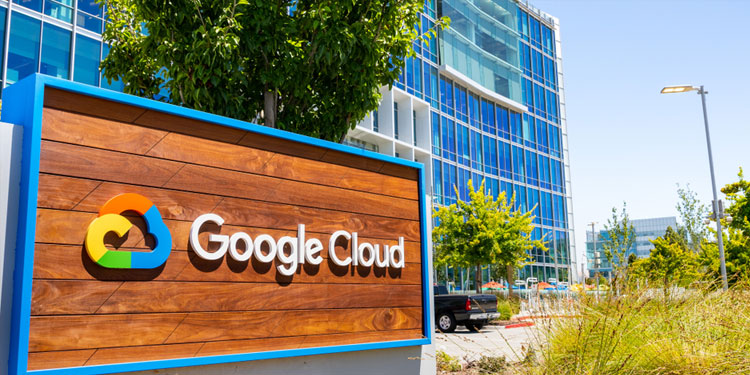
Google Cloud has introduced its own Layer-1 blockchain, known as Google Cloud Universal Ledger (GCUL), marking one of the company’s most direct moves into blockchain infrastructure. The initiative reflects the growing competition among technology firms seeking to capture institutional adoption of distributed ledger systems. By positioning GCUL as a blockchain tailored for enterprises and financial institutions, Google Cloud is signaling its intent to compete head-on with existing players in the market.
Python-Based Smart Contracts for Accessibility
One of the most distinctive aspects of GCUL is its integration of Python-based smart contracts. While most established blockchain ecosystems rely on languages such as Solidity or Rust, Google Cloud has opted for Python to reduce entry barriers for developers. Since Python is widely used in enterprise environments, this choice is expected to make blockchain development more accessible for engineers already proficient in the language. Observers suggest that this approach could help financial institutions experiment with on-chain deployment without requiring teams to retrain extensively in specialized programming skills.
Pilot Project with CME Group
At present, GCUL is operating in a private testnet phase. Its initial pilot involves a collaboration with the Chicago Mercantile Exchange (CME Group), focusing on tokenization and wholesale payments. Both areas have recently gained traction within institutional finance as organizations explore more transparent and efficient settlement systems. Industry participants view this pilot as a critical step in demonstrating the practical capabilities of GCUL for large-scale financial operations.
Trust-Neutral Infrastructure Approach
Google Cloud has described GCUL as a trust-neutral blockchain designed to serve as an open and platform-agnostic infrastructure layer. Unlike closed or proprietary systems provided by certain payment service providers, GCUL emphasizes flexibility and neutrality. This approach is expected to appeal to institutions seeking to avoid vendor lock-in and instead favoring systems that can interoperate with multiple platforms. Analysts noted that companies such as Tether and Adyen could find the open framework particularly attractive compared to rival networks.
Leveraging Google’s Global Capabilities
Executives at Google Cloud have pointed out that GCUL builds upon years of research and expertise in cloud networking. With these foundations, the platform aims to deliver high throughput, resilience, and scalability at a global level. The vision for GCUL includes supporting around-the-clock capital markets, with real-time settlement capabilities that align with increasing demand for 24/7 financial services. The company also sees opportunities to enable on-chain commercial bank money and ensure interoperability across multiple currencies and asset classes.
Institutional Demand for Enterprise Blockchains
The announcement of GCUL comes at a time of rising institutional interest in blockchain-based financial infrastructure. Central banks, payment providers, and asset managers are all accelerating efforts to scale tokenization projects. The demand for enterprise-grade blockchains is therefore increasing, and Google’s decision to step into this space signals an important shift in competitive dynamics. Rather than serving solely as a cloud provider to blockchain firms, Google Cloud is positioning itself as a direct contender in building core infrastructure.
Roadmap and Future Outlook
Google Cloud has indicated that detailed technical specifications for GCUL will be shared in the coming months. These will include information on its consensus mechanism, transaction finality, and governance structure. Broader testing with direct involvement from financial institutions is expected before the end of 2025. Full-scale services are projected to begin in 2026, potentially placing GCUL at the forefront of financial infrastructure innovation.
Industry watchers believe that if GCUL gains significant adoption, it could reshape the flow of capital, settlement practices, and asset tokenization. Such a development would establish Google Cloud as a dominant provider of blockchain solutions for global markets, bridging traditional finance with blockchain-enabled innovation.