
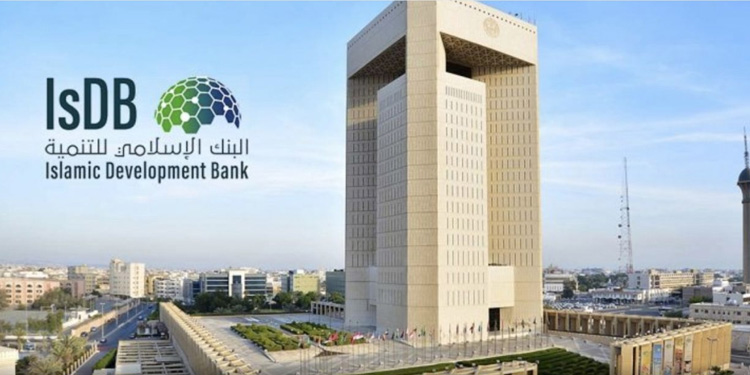
Islamic Development Bank Institute has announced that it has been awarded U.S. Patent No. 12,548,031 B2 by the U.S. Patent and Trademark Office, with the grant dated February 10, 2026. This achievement represents the Institute’s second patent recognized by the USPTO and its fifth patent overall, underscoring its continued leadership in financial technology innovation aligned with economic development and Islamic finance principles.
The newly granted patent protects an original method for reaching consensus within Distributed Ledger Technology environments, including blockchain networks. The mechanism, known as Proof-of-Use, introduces a different way for decentralized networks to validate transactions and maintain ledger integrity without relying on centralized authorities or resource-intensive competition.
Rethinking Consensus in Distributed Ledger Systems
In any blockchain-based system, the consensus algorithm plays a critical role by ensuring agreement on which transactions are valid, how they are ordered, and how the shared ledger remains tamper-resistant. Proof-of-Use proposes a structural shift away from traditional validation models by embedding reciprocity directly into the consensus process. Under this approach, participants validate transactions submitted by others in exchange for having their own transactions validated by the network.
This design links influence within the network to actual usage and participation rather than to computational capacity or the size of financial holdings. As a result, Proof-of-Use aligns incentives around meaningful engagement with the system, creating a framework in which contribution and utilization determine a participant’s role.
How Proof-of-Use Differs From Existing Models
Conventional consensus mechanisms such as Proof-of-Work and Proof-of-Stake rely on fundamentally different principles. Proof-of-Work depends on computational competition, often leading to escalating energy consumption, while Proof-of-Stake tends to favor participants with larger capital reserves. Proof-of-Use departs from both models by centering validation rights on reciprocity and active use.
Within this structure, the distinction between users and validators effectively disappears. Only participants who actively submit transactions and use the network are entitled to validate transactions from others. This contrasts with other models in which validators and users may have different incentives or priorities.
From an environmental perspective, Proof-of-Use removes the competitive dynamics that drive excessive energy use in Proof-of-Work systems. By eliminating the arms race for computational dominance, the mechanism supports a more sustainable operating model. In terms of fairness, the approach addresses the wealth concentration often seen in Proof-of-Stake systems by prioritizing utility and participation over financial power.
Relevance for Development Finance and Inclusion
The reciprocity-based nature of Proof-of-Use makes it particularly suitable for development finance use cases. Because validation rights are tied to transaction activity rather than speculative behavior, the model reduces the risk of network capture by external actors whose primary motivation is earning validation rewards. This characteristic aligns closely with development-oriented objectives, where the focus is on facilitating real economic activity and inclusive access rather than short-term gains.
The Institute has positioned this innovation as part of a broader effort to design digital financial infrastructure that supports equitable growth. By embedding participation-based incentives into the core of the technology, Proof-of-Use encourages responsible engagement and shared value creation across diverse user groups.
Strategic Vision and Future Direction
According to Dr. Sami Al-Suwailem, the Proof-of-Use mechanism forms an integral element of the Institute’s broader innovation portfolio. He has indicated that the Institute aims to build a digital ecosystem that promotes inclusive growth and shared prosperity across member countries and communities. In this context, the organization is actively evaluating strategic partnerships to leverage its innovations, consistent with the IsDB Group’s 10-year strategic framework that emphasizes expanding Islamic digital financial services and improving access to finance.
Overall, the patent recognition highlights the Institute’s role in advancing alternative blockchain architectures that balance efficiency, sustainability, and equity, while reinforcing its commitment to development-driven financial innovation.