
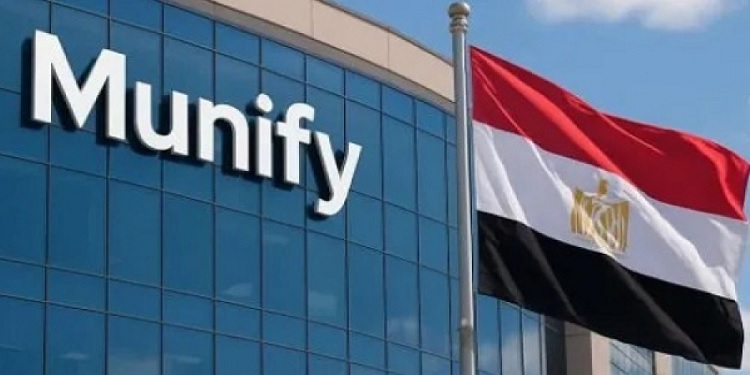
Munify, a newly established Egyptian fintech venture, has set its sights on becoming a prominent neobank in the Middle East and North Africa (MENA) region. Positioned to serve diaspora communities and international professionals, the company integrates blockchain technology to provide both business-to-business and business-to-customer financial solutions on a unified platform.
The firm has introduced a mobile application, available for iOS and Android, offering a broad suite of digital financial tools. Among its key features are multi-currency accounts, beginning with USD and soon expanding to include EUR and GBP. The platform also supports non-custodial wallets, enabling users to retain control of their assets, and provides virtual USDC cards for secure global transactions. Additionally, the application allows users to generate and issue invoices directly, streamlining business operations for freelancers and enterprises alike.
Tackling Cross-Border Payment Challenges
Munify’s core mission centers on addressing the high costs, inefficiencies, and complexities often associated with cross-border financial transfers. The company has developed its own proprietary “banking rails,” designed to directly connect financial systems in different countries. By bypassing conventional intermediaries such as Western Union and MoneyGram, this architecture enables faster transactions with lower fees. The system also makes it possible for users to access U.S. banking services using only a local identification document, thereby reducing traditional barriers to international finance.
According to industry observers, such an approach could significantly disrupt existing remittance and payment models. The emphasis on blockchain-powered infrastructure, combined with user-friendly financial products, positions Munify as a strong alternative for individuals and businesses looking for efficiency and transparency in cross-border dealings.
Founding Vision and Financial Backing
The startup was founded in 2024 by Khalid Ashmawy, who envisioned a solution that merges modern digital banking with blockchain’s trust-minimized architecture. To accelerate its expansion, Munify recently secured $3 million in funding. The round is expected to strengthen the company’s engineering capabilities, enhance regulatory compliance, and support its regional growth initiatives.
Congrats to @Munify_ai on their $3M seed!
Munify is building cross-border banking rails for Egyptians abroad to send money home instantly at better rates, while giving locals access to US banking – tackling Egypt's $30B annual remittance market.https://t.co/9LkqbQk1sO
— Y Combinator (@ycombinator) August 29, 2025
Backing for the funding came from notable players, including Y Combinator, which accepted Munify into its Summer 2025 accelerator cohort. Other contributors included BYLD and Digital Currency Group, both of which have a track record of supporting emerging fintech and blockchain ventures.
Building Toward Regional Expansion
Industry analysts note that Munify’s growth strategy appears aligned with the increasing demand for efficient financial solutions across the MENA region. The startup’s focus on offering multi-currency accounts and blockchain-based remittances resonates strongly with expatriates and globally mobile professionals who often face steep fees and delays in accessing international financial services.
Munify offers Middle East businesses and individuals seamless global banking with stablecoin-powered virtual cards.
Enjoy instant cross-border payments, multi-currency accounts, and real-time expense tracking, all secured by blockchain for fast, cost-effective, and safe. pic.twitter.com/s6kJprjb65
— Munify (@Munify_ai) August 24, 2025
With its dual business-to-business and business-to-customer approach, Munify is also positioning itself to support enterprises seeking reliable infrastructure for payments and invoicing. The combination of personal finance tools and business solutions creates a flexible platform capable of serving multiple market segments simultaneously.
Outlook for the Future
The integration of blockchain into financial services continues to gain momentum worldwide, and Munify’s entry underscores how startups in emerging markets are leveraging the technology to bridge systemic gaps. If successful in its rollout, the company could become a key player not only in Egypt but across the broader MENA landscape.
By pairing innovative architecture with strong financial backing, Munify is preparing to scale its platform beyond local markets. Observers suggest that the startup’s ability to execute on its vision could position it as a benchmark for blockchain-powered neobanks catering to diverse, globally connected communities.