
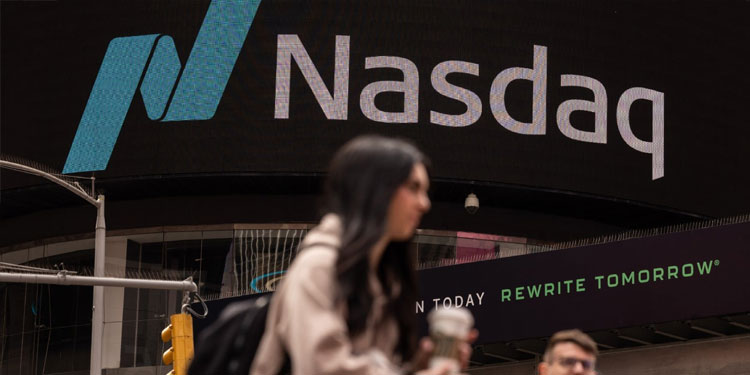
Nasdaq has formally approached the U.S. Securities and Exchange Commission (SEC) with a request to permit the listing and trading of tokenized stocks. The move is intended to integrate blockchain technology into established Wall Street practices while preserving current levels of investor protection.
The exchange submitted its filing on September 8, seeking amendments to existing regulatory frameworks, including the definition of securities. The proposal outlines that tokenized stocks would be treated under the same execution, documentation, and trading standards as traditional equities. However, any adjustments will require a public consultation period and final approval from the SEC before they can be enacted.
Equal Rights and Transparent Labeling
In its filing, Nasdaq highlighted that tokenized shares would carry identical rights and protections to their conventional counterparts. To support operational transparency, the exchange proposed that tokenized assets be clearly labeled, ensuring that clearing firms and the Depository Trust Company could process such instruments as they would regular stocks.
The exchange also explained that tokenized securities would hold the same execution priority as traditional assets, thereby avoiding any disruption in how trades are handled. Analysts note that the proposal is more than a technical adjustment; it raises broader questions about how securities are defined, issued, and settled in a financial system increasingly influenced by digital technologies.
Nasdaq aims for SEC approval on tokenized securities, a move @JessInskip_ sees as bullish for $NDAQ. She also notes $BLK's crypto push and $AVGO's A.I. pivot. @RickDucat breaks down the charts for investors. pic.twitter.com/qSCJsykrBz
— Schwab Network (@SchwabNetwork) September 9, 2025
Implications for Digital Assets and Market Perception
If Nasdaq’s plan gains approval, it could mark a pivotal step in normalizing blockchain-based assets within mainstream finance. The recognition of tokenized securities could broaden liquidity options, expand visibility for blockchain-related products, and strengthen the integration of digital tokens into everyday financial infrastructure.
The development is not about specific tokens like SHIB being directly listed on Nasdaq. Instead, the significance lies in the broader acceptance of tokenized assets as a legitimate financial category. Market watchers suggest that as tokenized equities become normalized, digital tokens such as SHIB could indirectly benefit from improved credibility. The alignment of financial infrastructure with tokenization may encourage greater adoption, higher trading volumes, and stronger engagement from institutional players.
Convergence of Finance and Blockchain
The initiative underscores Nasdaq’s intent to position itself at the intersection of traditional finance and blockchain innovation. By providing a regulated pathway for tokenized assets, the exchange is seeking to build a bridge between conventional equity markets and emerging digital economies.
Industry participants believe that as tokenized assets gain recognition on Wall Street, the perception of digital tokens will continue to shift from speculative instruments toward integral components of a maturing financial ecosystem. This convergence could ultimately influence how investors, regulators, and institutions approach both securities and cryptocurrencies in the years ahead.