

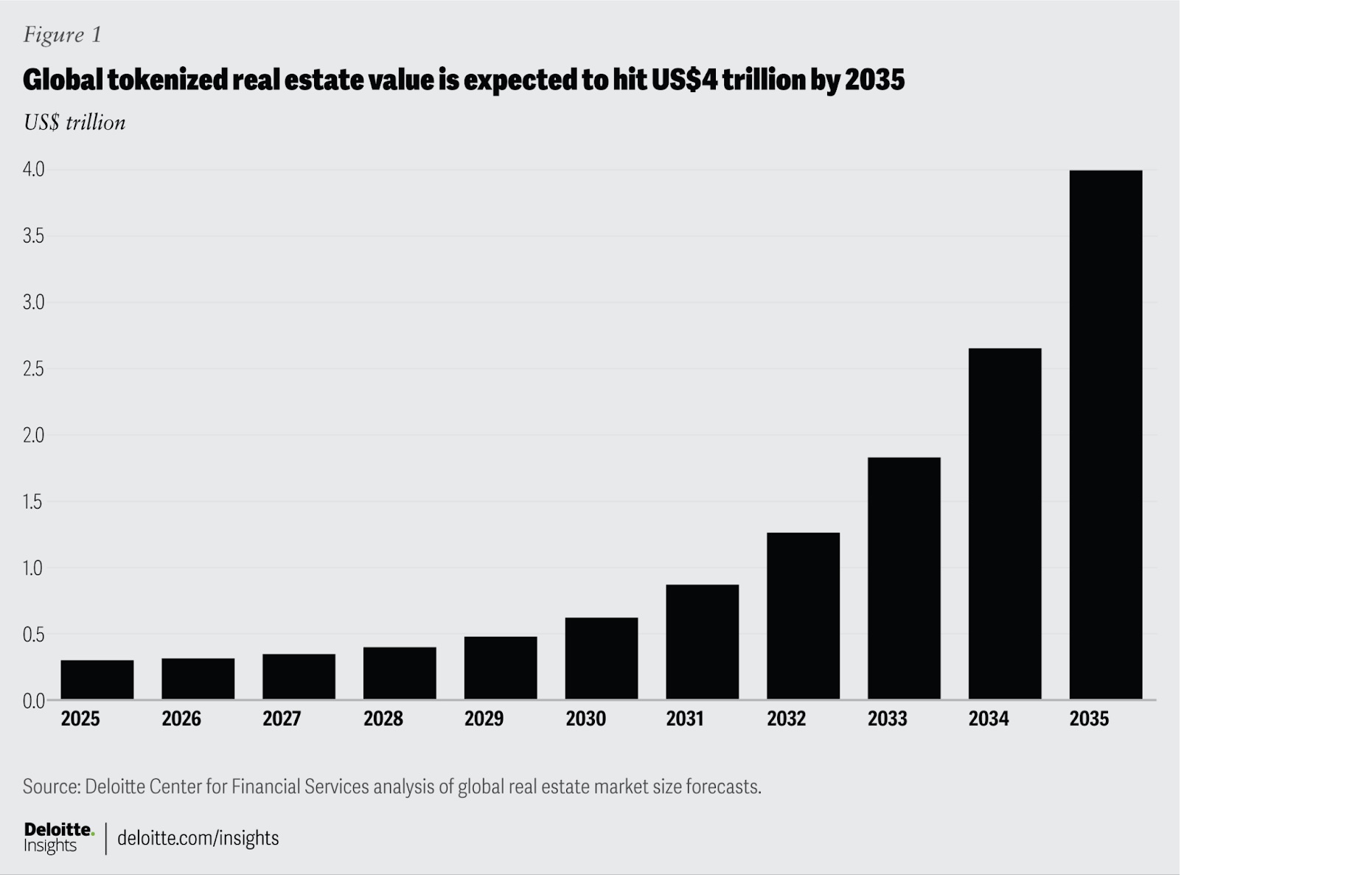
A recent report has indicated that over $4 trillion worth of real estate could be tokenized on blockchain networks within the next decade, potentially broadening access to property investment opportunities. The Deloitte Center for Financial Services projected that the value of tokenized real estate may rise sharply from under $300 billion in 2024 to surpass $4 trillion by 2035. According to the findings, the sector is expected to experience a compound annual growth rate (CAGR) exceeding 27%.
This anticipated surge in tokenized real estate is attributed to the advantages of blockchain-based assets, alongside a fundamental transformation occurring within the real estate sector. Chris Yin, co-founder of Plume Network, a blockchain initiative focused on real-world assets (RWAs), suggested that the real estate market has been evolving rapidly due to various factors. He pointed to post-pandemic remote work trends, growing climate risks, and the increasing digitization of industries as major forces reshaping property fundamentals.
Yin further elaborated that office spaces are undergoing significant repurposing, being transformed into facilities like artificial intelligence (AI) data centers, logistics hubs, and environmentally sustainable residential communities. He observed that investors are seeking precise exposure to these emerging property types and noted that tokenization offers a programmable and customizable approach to accessing such evolving asset classes.
Adding to the momentum behind tokenization, investor interest in the RWA sector has been strengthened by economic uncertainties triggered by trade policies during former U.S. President Donald Trump’s administration, particularly concerning import tariffs. Juan Pellicer, a senior research analyst at IntoTheBlock, explained that during times of global trade tensions, both stablecoins and RWAs have gained popularity as safe-haven assets.

The growing demand for tokenized assets was also evident when trading volumes for tokenized gold surpassed $1 billion on April 10, reaching their highest levels since March 2023. This spike occurred around the time the U.S. banking sector experienced a crisis marked by the collapse of Silicon Valley Bank and the voluntary closure of Silvergate Bank.


Chris Yin expressed optimism that increased adoption of RWAs could encourage a more favorable approach from global regulatory bodies. He suggested that although regulatory challenges remain, widespread use often leads to the development of clearer regulations, drawing a parallel with how Uber expanded before achieving regulatory acceptance in many jurisdictions. Yin emphasized that ensuring tokenized products are compliant with a broad array of international regulatory standards would be crucial in enabling wider market participation.

However, despite the optimism surrounding real estate tokenization, some voices within the industry have raised concerns about its immediate relevance. Michael Sonnenshein, chief operating officer of Securitize, commented during Paris Blockchain Week 2025 that real estate might not be the most appropriate initial target for tokenization efforts. He acknowledged that blockchain could streamline real estate processes by removing intermediaries and simplifying escrow mechanisms but argued that the current needs of the on-chain economy lean more toward assets that offer greater liquidity.
As the real estate sector continues to adapt and blockchain technology advances, the debate over the best use cases for tokenization remains active. Nevertheless, the outlook for tokenized assets appears poised for substantial growth in the years ahead.