
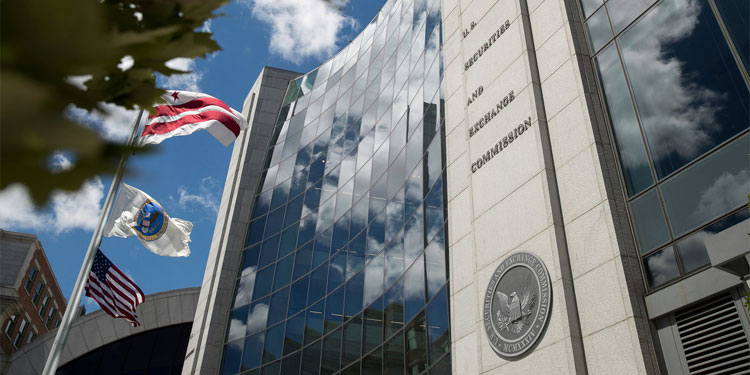
The U.S. Securities and Exchange Commission has authorized a three-year pilot program allowing the clearinghouse responsible for nearly all equity trades in the United States to begin recording select securities on approved blockchains. The decision, revealed through a No-Action Letter released on December 11, introduces blockchain-based recordkeeping into the core of American market infrastructure for the first time.
Sources familiar with the approval indicated that the Depository Trust Company, the clearing subsidiary of DTCC, can mint and burn blockchain tokens that represent the security entitlements already held in its custody. The federal agency stated that it would not pursue enforcement action if DTCC carries out these activities as part of the program. The pilot is expected to begin in the second half of 2026 and is intended to evaluate the impact of tokenization within a highly regulated market environment.
The No-Action Letter temporarily lifts several conventional requirements, including compliance with a set of SEC rules focused on operational reliability for critical market utilities. Certain clearing agency standards and the need for 19b-4 filings have also been waived for the duration of the pilot, giving DTCC flexibility to experiment with tokenized records without navigating the full regulatory process typically required for structural changes.
DTCC has stated publicly that the adoption of blockchain technology could help connect traditional financial systems with decentralized financial frameworks, potentially improving market resilience, efficiency, and accessibility. Under the pilot, participants will be able to choose whether to convert their traditional book-entry entitlements into tokenized versions, which will be represented by digital tokens held in blockchain wallets registered with DTCC.
To ensure oversight, the SEC requires DTCC to provide quarterly reporting on several metrics throughout the pilot period. These include the number of participating firms, the value of tokenized assets, the specific blockchains used, reported outages, the volume of registered wallets, and instances in which DTCC uses its authority to reverse or adjust transactions. These reports will help regulators assess operational performance, risk management, and market behavior in a hybrid blockchain environment.
Eligible securities for tokenization include assets common in major index-tracking ETFs, U.S. Treasuries, and instruments listed in benchmarks such as the Russell 1000. When a participant requests tokenization, DTCC removes the selected securities from its centralized ledger and places them into a digital omnibus account. It then issues a corresponding token in a blockchain wallet controlled by the participant. This process allows the entitlement to move on-chain while remaining tied to DTCC’s custodial framework.
In an historic milestone, DTC received a No‑Action Letter from the SEC to tokenize certain DTC‑custodied assets. By leveraging blockchain, DTCC aims to bridge TradFi and DeFi, advancing a more resilient, inclusive and efficient global financial system. https://t.co/yYNaHfvjcS pic.twitter.com/E4W47rWBIc
— DTCC (@The_DTCC) December 11, 2025
Industry observers noted that tokenizing securities could reduce the urgency of end-of-day reconciliation and create opportunities for transfers to occur outside standard market hours, while still maintaining the protections required for national market infrastructure. The pilot is structured to operate under a permissioned system, even though the underlying blockchains may be public or private networks that meet DTCC’s technology standards.
Tokens issued under the program will only be transferable between wallets registered with DTCC. The clearinghouse will also maintain a root wallet, giving it the ability to reverse transfers in the event of errors or misconduct, reinforcing the controlled environment mandated for systemically important entities. Although DTCC has not yet disclosed which networks will be supported, it indicated that a list will be published at a later stage.
The SEC’s authorization highlights a regulatory shift toward exploring how tokenization could modernize market infrastructure without compromising security or oversight. The DTCC pilot is expected to become a milestone in assessing how digital entitlements might coexist with, or potentially enhance, traditional recordkeeping systems in one of the world’s most heavily regulated financial markets.