
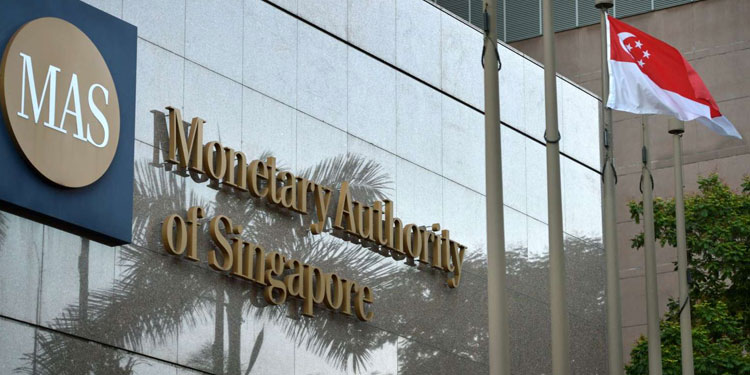
The Monetary Authority of Singapore has unveiled a major initiative that introduces tokenized Singapore government bills to be settled using a wholesale central bank digital currency. The plan is being viewed as a significant stride in Singapore’s ambition to position itself as a global leader in tokenized finance amid rising digital-asset adoption across Asia.
According to the regulator, the trial is scheduled for rollout in 2026 and reflects a shift from exploratory testing to practical implementation of blockchain-based financial infrastructure. Alongside the pilot, the authority confirmed that it is preparing to finalize legislation governing stablecoins, with a focus on establishing strong reserve safeguards and dependable redemption mechanisms. Taken together, these efforts illustrate Singapore’s structured, regulated approach to digital-asset development, emphasizing both innovation and institutional stability.
Tokenized Bills to Be Settled With Wholesale CBDC
Under the planned pilot, primary dealers will be permitted to issue Singapore-dollar government bills in tokenized form. These instruments will be settled through a wholesale central bank digital currency that has been developed in collaboration with domestic financial institutions, including DBS Bank, OCBC Bank, and United Overseas Bank. The banks have reportedly conducted interbank overnight lending transactions using the CBDC during earlier testing phases.
The authority stated that the model aims to assess potential advantages such as continuous settlement, fewer intermediaries, improved collateral mobility, and stronger market liquidity. By placing government bill settlement directly on blockchain rails supported by central bank money, Singapore becomes one of the earliest jurisdictions to merge tokenized instruments with central bank settlement layers.
MAS announced the successful completion of a live trial for settlement of interbank overnight lending transactions using wholesale CBDC on the Singapore Dollar Test Network (SGD Testnet).
For more: https://t.co/7UJ1lLyd3I
— MAS (@MAS_sg) November 13, 2025
This approach, supported by major commercial banks and the central bank, underscores that tokenization is being embedded into real financial-market plumbing rather than tested in isolation. Industry observers believe that tokenized bills and regulated stablecoins demonstrate how blockchain infrastructure can be integrated into existing capital markets to increase adoption and expand market depth.
Stablecoin Rules Set for Finalization
In parallel with the tokenized bill pilot, the authority indicated that it has completed key design elements of its stablecoin regulatory framework and intends to release draft legislation soon. The rules will focus on single-currency stablecoins pegged either to the Singapore dollar or major global currencies. Requirements will include full reserve backing, prompt redemption, and stringent anti-money-laundering and Know-Your-Customer compliance measures.
The aligned rollout of tokenized bills and stablecoin legislation reflects Singapore’s goal of embedding regulated digital assets into the foundation of its financial system. Officials have repeatedly emphasized that innovation must be paired with strong oversight to ensure transparency, security and interoperability across the ecosystem.
Next Steps Toward a Tokenized Financial Future
The regulator’s upcoming consultation paper and the scheduled 2026 pilot represent important milestones in Singapore’s digital-finance roadmap. Market participants are expected to watch closely for clarity on initial issuance size, participant eligibility, settlement performance at scale, and the extent to which the stablecoin framework will support applications beyond payment transactions.
For the broader digital-asset industry, Singapore’s developments signal that blockchain-enabled financial infrastructure is moving decisively toward real-world use. Analysts anticipate that hybrid systems combining wholesale CBDCs with tokenized financial instruments may shape the next era of financial-market innovation as jurisdictions explore more efficient, programmable, and secure settlement architectures.