
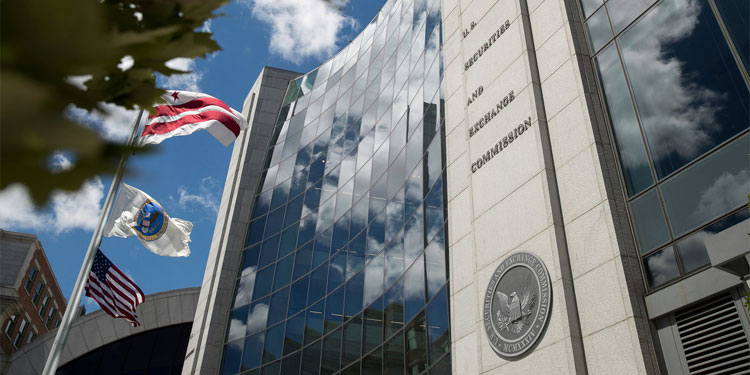
The U.S. Securities and Exchange Commission has proposed changes to rules governing transfer agents that could allow blockchain networks to serve as official records of securities ownership, marking a significant step toward integrating tokenized assets into the traditional U.S. financial system.
The SEC unveiled the proposed amendments on September 1, seeking to update transfer agent regulations that were developed decades before blockchain technology emerged. Transfer agents play a central role in securities markets by maintaining records that identify who owns securities and supporting the processing of ownership changes.
Under the proposed framework, blockchain technology could become an officially recognized method for maintaining those ownership records. The move would create a regulatory pathway for securities issuers and market participants to use distributed ledger technology as part of the formal infrastructure supporting securities ownership.
If adopted, the proposal would allow blockchain-based ledgers to be used as official records of securities ownership, providing a regulatory foundation for tokenized securities to operate within the existing U.S. securities framework.
Reporting requirements would also expand
The SEC’s proposal would not only address the use of blockchain for recordkeeping but also introduce additional reporting requirements for transfer agents involved with tokenized securities.
Under the proposed changes, transfer agents would be required to provide the SEC with information concerning the number of tokenized securities under their administration. They would also need to identify the blockchain platforms being used to maintain records associated with those securities.
The additional disclosures would give regulators greater visibility into the growing use of blockchain-based infrastructure in securities markets. It would also provide the agency with information that could help it monitor how tokenized securities are being issued, recorded and transferred across different blockchain networks.
The reporting requirements could become particularly relevant as financial institutions and securities issuers explore blockchain-based alternatives to conventional market infrastructure. Tokenization can allow traditional financial assets to be represented digitally on blockchain networks, potentially enabling more automated settlement and ownership transfers.
Regulatory framework could accelerate on-chain securities
The proposed amendments represent a broader effort to establish rules capable of accommodating technological changes in financial markets. Rather than treating blockchain as a separate system operating outside conventional securities infrastructure, the proposal could bring blockchain-based recordkeeping within an established regulatory framework.
The development is particularly significant for tokenized securities because ownership records are a fundamental component of securities markets. Official recognition of blockchain records could reduce uncertainty for institutions considering the use of distributed ledger technology for issuing and managing securities.
The proposal could provide institutional investors, issuers and market infrastructure providers with greater regulatory clarity when developing blockchain-based systems for the issuance, distribution and administration of tokenized securities.
The move could also encourage financial institutions to expand experiments involving on-chain representations of stocks, bonds and other regulated financial instruments. A clearer framework may make it easier for firms to integrate blockchain systems with existing transfer-agent functions while continuing to meet regulatory obligations.
SEC targets modernization of market infrastructure
The proposal comes as financial markets increasingly examine whether blockchain technology can improve the efficiency of securities infrastructure. Traditional ownership and settlement systems rely on established intermediaries and recordkeeping processes, while blockchain networks can provide shared digital records that are updated according to predefined rules.
However, broader adoption in regulated markets depends heavily on regulatory recognition and operational standards. The SEC’s proposed changes could address part of that challenge by defining how transfer agents may use blockchain while remaining subject to federal securities regulations.
By recognizing blockchain as a potential official ownership ledger, the SEC proposal could represent an important step toward moving parts of the U.S. securities market on-chain while maintaining regulatory oversight.
The amendments remain a proposal and would need to go through the SEC‘s regulatory process before any changes take effect. If ultimately adopted, the rules could influence how transfer agents, securities issuers and financial institutions build and operate infrastructure for tokenized assets in the United States.