
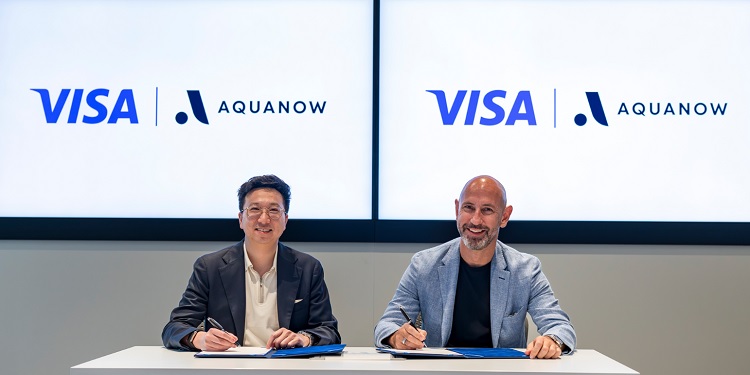
Visa has announced an expansion of its stablecoin settlement network across Central and Eastern Europe, the Middle East, and Africa (CEMEA), supported by a new collaboration with Aquanow, a digital asset services provider. This initiative is aimed at enhancing how financial institutions in these regions handle settlement by integrating Aquanow’s digital asset infrastructure with Visa’s technology stack.
The arrangement will allow issuing and acquiring institutions in CEMEA to settle transactions using approved stablecoins, including USDC. By incorporating blockchain-based settlement processes, Visa intends to reduce operational burdens, streamline back-end workflows, and accelerate how quickly institutions complete settlement cycles, especially across borders.
Rising Demand for Efficient Cross-Border Settlement
The global push for faster and more cost-effective cross-border payment solutions continues to reshape the financial sector. Stablecoins have been increasingly recognized as an effective tool for tackling long-standing settlement challenges such as limited weekend processing capabilities, high intermediary fees, and unpredictable clearing times.
Visa’s involvement with stablecoin settlement is not new. In 2023, it became one of the first major payment networks to allow its clients to settle obligations in USDC through an early-stage pilot. That initiative has since expanded significantly, with monthly settlement volumes now exceeding an annualized rate of over $2.5 billion.
Godfrey Sullivan, who oversees Product and Solutions for the CEMEA region at Visa, noted that the company believes stablecoins paired with Visa’s established global infrastructure can give institutions faster and more streamlined settlement experiences. He also suggested that the collaboration with Aquanow represents an important step toward upgrading payment infrastructure, reducing dependence on traditional systems that rely on multiple intermediaries, and preparing institutions for more modern digital settlement frameworks.
Aquanow’s Role in the Regional Deployment
Aquanow provides digital asset services to institutions such as banks, brokerages, neobanks, and payment providers. The company handles billions of dollars in monthly crypto-related transactions, positioning it as a strong operational partner for Visa’s expanded stablecoin initiative. CEO Phil Sham emphasized that Visa’s long-standing reliability in global payments aligns well with Aquanow’s goal of offering institutions more accessible ways to participate in the digital economy. He indicated that stablecoin settlement introduces levels of speed and transparency that mirror the efficiency of internet-based systems.
Aquanow x Visa – Stablecoins Enter The Financial Mainstream.@Visa has selected @Aquanow to expand stablecoin settlement across CEMEA, enabling issuers and acquirers to settle with approved stablecoins like USDC.
Faster cycles. Lower friction. 365-day settlement.
Pilot →… pic.twitter.com/twyDRi4cSg
— Aquanow (@aquanow) November 26, 2025
Visa has already surpassed $200 million in cumulative stablecoin settlement volume as of July this year, while simultaneously expanding its crypto-focused infrastructure in Africa and other developing markets. This broader push includes new platform features and deeper partnerships designed to support stablecoin adoption at scale.
Regulatory Landscape and Continued Growth
Despite the ongoing expansion, Visa leadership has acknowledged that the regulatory environment surrounding stablecoins remains a critical factor for broader adoption. CEO Ryan McInerney has stated that clearer rules are necessary for the technology to achieve its full potential and operate with greater institutional confidence.
The company reported strong financial performance in the second quarter of 2025, generating $9.6 billion in net revenue, an increase of 9 percent compared to the previous year. Visa continues to build out its stablecoin capabilities, including its first seven-day-a-week settlement system and the development of the Visa Tokenized Asset Platform aimed at partnering with banks on digital asset initiatives.
With increasing demand for digital settlement tools and growing institutional interest in blockchain-powered payment systems, Visa’s partnership with Aquanow underscores a significant shift toward faster and more transparent financial infrastructure across emerging global regions.