

April 2022 was the peak of the NFT frenzy when the NFT market cap reached its highest of $437.6 billion, which has now reduced to only $11 billion. The NFT market had exploded into pop culture. Pixelated punks, bored apes, and even the screenshots of tweets filled timelines with massive hype. Auctions set records, and celebrities joined mint parties. Venture funds chased marketplaces, while brands issued collectibles to test digital loyalty. Bullish headlines framed NFTs as a new internet ownership layer and a domain for investors.
Discord servers, Telegram channels and bots, and Twitter communities were into just one thing: how to make their projects sell and catch the hype. For a season, art, gaming, and status merged on the blockchain, and the new use cases were being included with every project. Screens turned into galleries, and profile pictures turned into NFT-based PFPs. At that height, attention felt infinite, but unfortunately, the hype soon vanished.
The Numbers of the forgotten Market:
The Block charts show an unprecedented rise in daily Ethereum NFT mints through 2021 and into mid-2022, with spikes reaching several hundred thousand mints per day, then a long collapse toward a thin baseline through 2023–2025. The curve resembles a classic blow-off top, followed by low, steady issuance. In short, creation activity has not returned, despite periodic crypto rallies.
Weekly trading volume across chains surged to multi-billion-dollar peaks during 2021–2022, led mainly by Ethereum, then fell sharply. Later volumes have remained a fraction of the highs, even as activity spread to Solana, Polygon, and others. This pattern signals that liquidity and speculative churn have drained from the market, while no successor wave has replaced the 2021–2022 mania.
:Market-wide price performance and ETH’s new ATH. CryptoSlam’s CS500, a broad NFT market proxy, sits far below its 2022 peak, with the index down more than 98% from its high, which illustrates a deep, persistent drawdown.
At the same time, the Ethereum price has updated a fresh all-time high of around $4941 in August 2025. That divergence matters. The underlying asset has reclaimed records, while NFT prices and activity have not, which implies that the NFT niche has decoupled from ETH’s strength and remains in a prolonged bust.
What Happened to the NFT Market?
Three forces have driven the NFT decline. Step one: easy money had inflated prices beyond use. Step two: oversupply had diluted attention and resale depth. Step three: trust had cracked after rug pulls, wash trades, and missed roadmaps. Gas fees had bitten during peaks, so small buyers had exited. Regulatory risk has persisted. Even as Ethereum has printed a new all-time high, NFT volumes have stayed depressed, which has shown decoupling from the broader market.
- Cheap liquidity had faded
- Supply exploded across chains
- Lack of trust due to fraud
- Utility lagged behind promised visions
- Retail interest shrank
- Liquidity incentives vanished
Will NFT Market ever Recover?
Prove utility in Web3 games. Games that bind items to player identity have already shown stronger retention than flip-only drops. When assets unlock perks, match skill, and move across titles through standards, value lasts beyond hype. Studios that share marketplace fees with players and creators have built healthier loops, and that pattern has outperformed vanity mints.
Pair NFTs with AI creativity and licensing. AI-assisted collections that record provenance, usage rights, and revenue splits on-chain have lowered disputes and opened new income lines. Dynamic NFTs that update with model outputs or real events have kept holders engaged. Clear licenses plus automatic splits have attracted established artists who prefer predictable payouts.
Connect NFTs to Real-World Assets. The tokenized-assets chart you shared has climbed toward roughly 2 billion dollars in market cap, with Paxos and Tether products leading issuance.

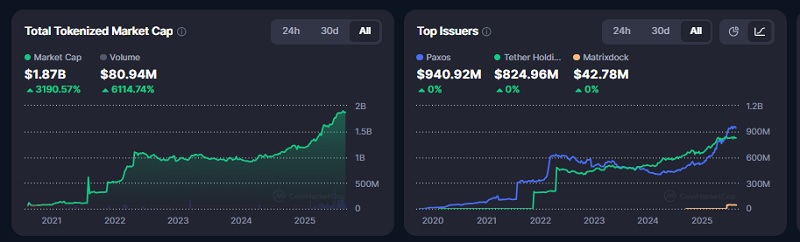
This growth has signaled that regulated yield and real collateral have gained traction on public chains. NFTs can act as access passes, receipts, or claim tickets for RWA streams, which link culture to cash flows and reduce reliance on speculation.
The NFT boom rested on attention, easy money, and staged scarcity, but as the attention moved and supply kept expanding, about $437 billion in paper wealth vanished.
To win back trust, the NFT space must tie tokens to clear utility and enforceable rights. It must link ownership to real services and offer basic consumer protections.
Even if these fixes work, the trophy JPEG era will not return. People who paid millions for ape pictures will never be able to recover their investments. That hype is long gone now, and those peak prices will not come back.