
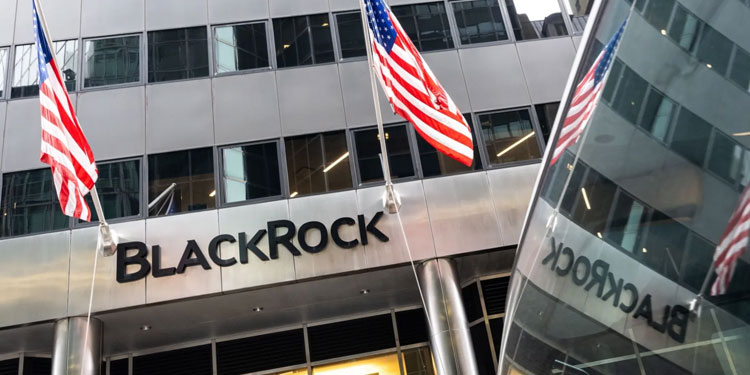
BlackRock has moved further into blockchain-based finance by filing to launch tokenized shares of a money market fund that would operate across Solana, Ethereum and Tempo. The initiative reflects growing institutional interest in using public blockchain networks to record ownership of traditional financial assets.
The proposed BlackRock Daily Reinvestment Stablecoin Reserve Vehicle would trade under the ticker RSVXX. According to a filing submitted to the U.S. Securities and Exchange Commission and dated July 31, the fund would invest entirely in cash, short-term U.S. Treasury securities and overnight repurchase agreements backed by those government securities.
Money market funds are generally designed to preserve capital and maintain relatively stable values by investing in highly liquid, short-duration financial instruments. BlackRock’s proposed structure would apply blockchain technology to the recording and transfer of fund ownership while retaining a portfolio focused on traditional low-risk assets.
BlackRock’s proposed RSVXX fund would record share ownership on public blockchain networks, extending the asset manager’s tokenization strategy to Solana, Ethereum and Tempo.
The filing indicated that ownership records would be maintained on the selected blockchain networks rather than being limited to conventional centralized databases. This approach could provide investors and financial institutions with greater flexibility in transferring and using tokenized fund shares within blockchain-based financial systems.
Solana has emerged as an increasingly important network for tokenized real-world assets because of its relatively fast transaction processing and lower transaction costs. The network’s technical characteristics have made it a potential platform for financial products that may require frequent transactions or broader access to blockchain-based settlement.
Securitize, a company specializing in the tokenization of financial assets, would serve as the transfer agent for the proposed fund. In that role, the company would maintain the official records of fund ownership and support the administration of tokenized shares.
Fund Could Support Stablecoin Reserve Requirements
The proposed fund has also been structured to potentially qualify as an eligible reserve asset under the GENIUS Act, a U.S. law enacted in July 2025 that established regulatory requirements for U.S. dollar-pegged stablecoins.
The structure could allow stablecoin issuers to hold shares of the BlackRock fund as part of the reserves supporting their digital currencies, subject to applicable regulatory and operational requirements.
The proposed use could strengthen the connection between regulated money market products and the stablecoin sector. Stablecoin issuers generally need to maintain liquid assets that support the value of tokens linked to the U.S. dollar. A tokenized fund invested in cash and short-term government securities could provide an additional option for managing those reserves.
The development also demonstrates how traditional asset managers are exploring blockchain technology beyond cryptocurrency investment products. Tokenization can allow conventional assets, including government securities and money market fund shares, to be represented digitally and potentially transferred through blockchain infrastructure.
The expansion follows BlackRock’s earlier entry into tokenized finance. In 2024, the company introduced its first tokenized money market fund, BUIDL, in collaboration with Securitize. The fund has grown to approximately $2.5 billion in assets and has gained wider use across digital asset markets.
BUIDL has been used as collateral in cryptocurrency-related borrowing and leveraged trading activities, demonstrating how tokenized versions of traditional financial products can be integrated into blockchain-based financial services.
Institutional Demand for Tokenized Assets Grows
The latest filing indicates that BlackRock is continuing to expand its presence in tokenized financial products as institutional interest in blockchain infrastructure increases. The use of Solana, Ethereum, and Tempo could allow the proposed fund to reach different blockchain communities and support a broader range of financial applications.
Tokenized money market funds may offer financial institutions faster access to settlement systems and greater flexibility in using traditional assets within digital financial platforms. Recording ownership on blockchain networks could also improve the efficiency of asset transfers and enable more automated financial processes.
Source: https://t.co/GgU8rKb8rJ
— Solana (@solana) August 3, 2026
By combining short-term U.S. government-backed assets with public blockchain infrastructure, the proposed fund could help connect traditional liquidity management with emerging digital asset markets.
The initiative may also support broader adoption of blockchain technology among regulated financial institutions. As tokenized products become more widely available, banks, stablecoin issuers and other market participants may increasingly use blockchain networks for settlement, collateral management and reserve administration.
The proposed launch remains subject to regulatory review and the operational requirements associated with the fund’s structure. However, the filing represents another step in BlackRock’s effort to bring established financial products onto blockchain networks.
The expansion to Solana, alongside Ethereum and Tempo, highlights the growing role of multiple blockchain platforms in institutional tokenization. As demand for blockchain-based versions of traditional assets develops, financial firms may continue to explore new methods for improving settlement efficiency, expanding asset accessibility, and integrating conventional investment products with digital financial infrastructure.