
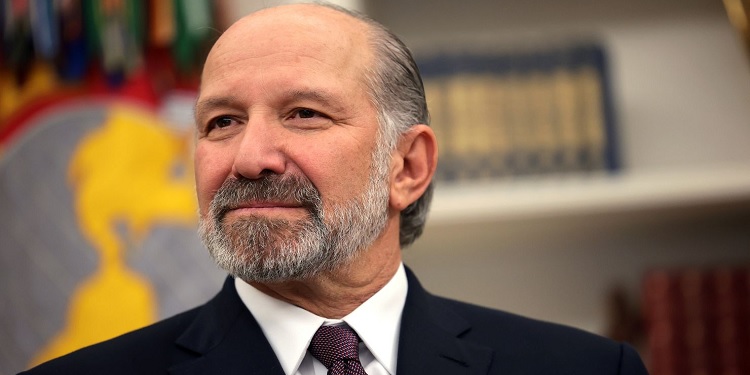
The U.S. Commerce Department has outlined plans to distribute gross domestic product (GDP) figures directly through blockchain networks, signaling a significant step in modernizing economic data dissemination. The move, revealed by Commerce Secretary Howard Lutnick during a cabinet meeting with President Trump, represents one of the most ambitious federal blockchain initiatives to date. Officials described the development as part of the administration’s broader pro-cryptocurrency agenda, designed to strengthen transparency and place the U.S. at the forefront of digital financial infrastructure.
During the high-level session, Lutnick explained that the Department of Commerce would begin publishing key statistics on blockchain systems, with GDP being the first indicator to undergo this transformation. While detailed technical frameworks are still being refined, the announcement made clear that the government is committed to embedding decentralized ledger technology within its economic reporting processes.
Transforming Government Data Distribution
The proposal is not limited to the Commerce Department’s operations. Lutnick indicated that blockchain-published data would be accessible across all federal agencies, creating a shared pool of real-time information. This inter-agency transparency, he argued, could reshape how departments coordinate policy decisions and respond to economic conditions.
Analysts noted that the initiative could also address long-standing criticisms of delayed or filtered government data releases. Real-time GDP data on blockchain would ensure equal access for citizens, investors, and global markets, reducing information gaps that traditionally favored institutional players. Supporters suggested that blockchain’s immutability and transparency could set new standards for accountability in public reporting.
Collaboration Between Policy and Technology Leaders
The effort is being advanced through cooperation between Lutnick and David Sacks, the White House advisor on cryptocurrency and artificial intelligence. Sacks, who earlier this year influenced the administration’s Bitcoin reserve proposal, is bringing Silicon Valley expertise to complement Lutnick’s Wall Street experience. Their combined leadership has been portrayed as a strategic alliance to ensure blockchain integration within federal systems.
The administration’s alignment on this project suggests that the initiative is part of a broader roadmap, rather than an isolated experiment. Observers remarked that it reflects a deliberate effort to push blockchain adoption deeper into U.S. government functions.
Lutnick’s Pro-Crypto Stance and Market Views
Lutnick’s financial background has long shaped his perspective on digital assets. Known for advocating Bitcoin as a commodity comparable to gold, he has often emphasized its potential as a store of value. During Senate confirmation hearings, he defended the backing of stablecoins and downplayed concerns about cryptocurrencies being misused for illicit activities.
In his remarks at the cabinet meeting, Lutnick also criticized Federal Reserve policies. He argued that lowering interest rates could significantly reduce taxpayer costs, estimating that each percentage point cut would save hundreds of billions annually. His statements suggested dissatisfaction with the central bank’s cautious approach, reflecting broader administration concerns about monetary policy and growth.
BREAKING: U.S. Commerce Secretary Lutnick announces that the U.S. will be issuing economic data on blockchain, beginning with GDP data.
The U.S. government is officially embracing blockchain technology.
— The Kobeissi Letter (@KobeissiLetter) August 26, 2025
Implications for Markets and Transparency
If successfully implemented, blockchain-based GDP reporting could reshape how financial markets process economic data. Traditional releases often trigger volatility as participants react to scheduled announcements. By contrast, simultaneous blockchain distribution would give all market participants immediate access to figures, potentially improving efficiency and reducing imbalances.
However, some experts have raised concerns about whether instant access to unexpected revisions could amplify short-term market reactions. Cryptocurrencies, in particular, might display stronger correlations with economic indicators once blockchain-native reporting ties digital assets more closely to macroeconomic developments.
Beyond markets, the initiative is being positioned as a milestone in citizen empowerment. Direct blockchain access to public statistics would eliminate intermediaries, giving small investors, academics, and international observers the same data that institutions receive. This democratization aligns with the fundamental principles of decentralization and equal access.
Global Leadership in Blockchain Governance
Internationally, the U.S. may set a precedent with this approach. While other countries have explored blockchain applications in areas such as central bank digital currencies or voting systems, publishing a core economic metric like GDP on decentralized networks represents a first. Analysts suggested that success could encourage other governments to adopt similar measures, positioning the U.S. as a leader in blockchain-enabled governance.
The Commerce Department’s initiative therefore extends beyond technological experimentation. It underscores a shift toward transparency, efficiency, and citizen participation in the digital era. If carried through, it could mark the beginning of a new model for government data distribution, one that reshapes not only markets but also the relationship between governments and their citizens.