
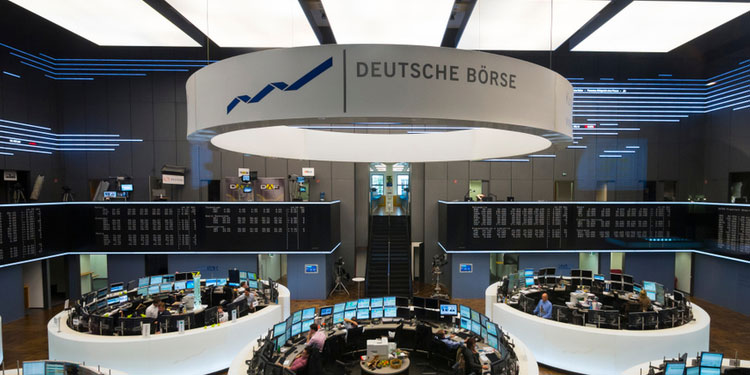
Deutsche Börse, the German stock exchange operator, has announced plans to integrate stablecoins issued by Société Générale’s digital asset unit into its settlement operations. This move is being positioned as an effort to increase the real-world usage and acceptance of blockchain-based assets within traditional financial systems. The initiative marks a notable development, as it represents the first time these stablecoins will be incorporated into a mainstream market infrastructure.
Société Générale’s crypto subsidiary, SG-FORGE, has developed two public stablecoins: one pegged to the US dollar and another to the euro. Despite being available in the market, both tokens have thus far recorded limited adoption and were primarily used within niche or experimental environments. The new collaboration with Deutsche Boerse could potentially change this dynamic by exposing the tokens to a far broader institutional user base.
As part of the integration, Deutsche Boerse intends to make these tokens available through Clearstream, its post-trade services platform. The tokens are expected to be added to Clearstream’s custody offerings, and the companies have hinted at additional applications, including their potential use in trade settlement and collateral management. With this step, the partnership aims to bring digital asset functionality closer to the core of financial market operations.
Jean-Marc Stenger, Chief Executive of SG-FORGE, reportedly emphasized that stablecoins provide a faster and more cost-effective method for transferring funds. He suggested that the objective behind this initiative is to replicate the advantages observed in the crypto ecosystem within the established financial landscape. According to his view, the use of blockchain-based settlement could streamline processes and reduce friction, aligning traditional finance with modern digital efficiencies.
The collaboration reflects a broader trend across global finance, where banks and investment institutions continue to explore practical applications for blockchain-based assets. Stablecoins, in particular, have drawn interest due to their price stability and potential utility in cross-border transactions, instant settlements, and liquidity management. Despite this interest, widespread institutional adoption has remained slow, leaving initiatives such as this one under close watch by market observers.
Current data from Societe Generale indicates that roughly $29.6 million of its dollar-pegged stablecoin is in circulation, alongside a euro-pegged token supply totaling 65.2 million euros, equivalent to about $75.6 million. These figures remain relatively modest when compared to the broader stablecoin market. The sector continues to be dominated by Tether, headquartered in El Salvador, which claims to have issued $184 billion worth of tokens globally.
The move by Deutsche Boerse could signal a shift toward greater legitimacy and utility for European-issued stablecoins, particularly within regulated trading environments. If the initiative succeeds, it may encourage similar efforts from other financial institutions seeking to modernize settlement processes and harness blockchain technology without abandoning regulatory frameworks or market stability.
As blockchain-based financial products find more structured pathways into traditional markets, this partnership could serve as a blueprint for future integrations. It represents a potential milestone in the ongoing evolution of digital finance, where innovation increasingly aligns with institutional reliability and compliance.