New Jersey has long been recognized as a hub for cryptocurrency and blockchain innovation, a reputation that dates back to the mid-2010s when Galaxy Digital, founded by Princeton graduate Mike Novogratz, made its presence felt in the region. The state’s growing involvement with blockchain technologies has now advanced further, with Bergen County taking a significant step to digitize its property records.
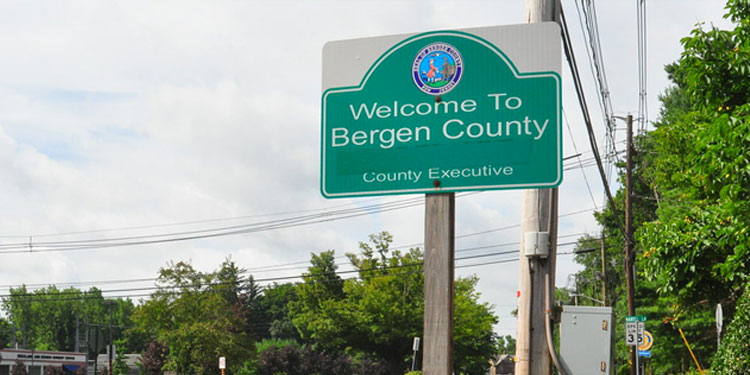
Bergen County, located in the northeastern part of the state and known as the most populous county in New Jersey, has announced an ambitious project to transfer its real estate deeds onto blockchain infrastructure. The initiative highlights the county’s commitment to adopting Web3 technologies while reinforcing the state’s broader interest in digital assets.
Tokenization of deeds through Balcony partnership
The county administration revealed that it had entered into a five-year agreement with Hoboken-based blockchain firm Balcony to oversee the tokenization of around 370,000 property deeds. This transfer of deeds onto blockchain is expected to dramatically accelerate real estate transactions by reducing processing times by as much as 90 percent. In addition, the move is anticipated to reduce fraud risks, enhance record accuracy, and help prevent disputes related to property ownership.
Balcony’s chief executive Dan Silverman emphasized that the project marked a milestone in the way governments manage real estate data. He suggested that decentralized and secure systems could serve as replacements for outdated infrastructure while providing tangible benefits for both officials and residents.
The deeds in question, which account for approximately $240 billion worth of property across all 70 municipalities in Bergen County and directly affect nearly one million residents, will be recorded on the Avalanche blockchain. The platform was developed by New York-based Ava Labs, led by Princeton alumnus Emin Gün Sirer.
Not New Jersey’s first blockchain experiment
Although Bergen County’s plan is the largest of its kind in the Garden State and represents the first full-county adoption, it is not the first attempt in New Jersey to experiment with blockchain for property records. Cities such as Camden, Orange, Fort Lee, and Morristown have previously embarked on similar projects aimed at digitizing deeds to simplify real estate transactions while ensuring personal data security.
Balcony has already demonstrated tangible results through its work in the city of Orange, where nearly $1 million in lost revenue was reportedly recovered due to inefficiencies in traditional record-keeping systems. This success has strengthened arguments for scaling such initiatives to larger jurisdictions.
Global and national momentum in blockchain real estate
The Bergen County initiative is being described as one of the largest blockchain-based property record projects ever undertaken in the United States. By pursuing this path, the county joins a limited but growing group of global jurisdictions, including Dubai, that have launched blockchain property programs. Dubai’s Land Department, in partnership with national regulatory bodies, announced earlier this year that it would allow fractional ownership of real estate, enabling investors to purchase shares of properties for as little as $540.
It remains uncertain whether Bergen County or other parts of New Jersey will adopt similar fractionalized ownership models. However, Bergen’s move positions it as a leader in state-level blockchain adoption and sets the stage for potential expansion.
Crypto’s strong presence in New Jersey
The county’s blockchain initiative aligns with New Jersey’s broader profile as one of the most crypto-active states in America. Recent findings placed New Jersey second nationwide in terms of adult crypto ownership, trailing only California but ahead of states like New York and Washington.
The state also leads the nation in Google search activity for Ethereum and ranks second in overall crypto-related search volume. In addition, New Jersey is noted for its widespread network of crypto ATMs, which contributes to its reputation as one of the most crypto-ready regions in the United States.
Through initiatives such as Bergen County’s deed tokenization, New Jersey continues to reinforce its position as a frontrunner in blockchain adoption, showcasing how digital transformation can be applied to traditional sectors like real estate.