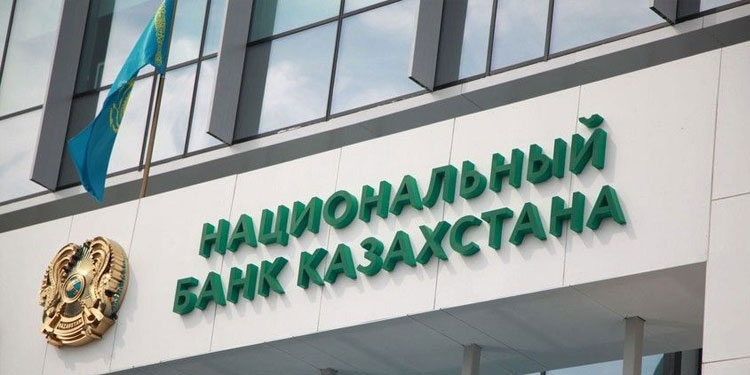
The National Bank of Kazakhstan has initiated a pilot project to test a stablecoin backed by the national currency, the tenge. The asset, named Evo (KZTE), is being developed in collaboration with Solana and Mastercard, signaling a blend of traditional finance and blockchain technology.
Evo’s issuance will be overseen by entities participating in the country’s regulatory sandbox, including the crypto exchange Intebix and Eurasian Bank. Developers have positioned Evo as a national stablecoin designed to integrate blockchain innovations with the conventional financial system.
The token, pegged to the tenge, has been planned for use in expanding the crypto-to-fiat gateway, enabling digital asset exchanges, and supporting transactions through cryptocurrency-linked payment cards.
Unlike central bank digital currencies directly issued by monetary authorities, Evo will not be created by the National Bank itself. Instead, the regulator will provide the legal and regulatory framework necessary for its issuance and testing. This move forms part of the broader strategy to develop Kazakhstan’s virtual currency ecosystem.
Officials Emphasize Innovation and Financial Inclusion
National Bank Governor Timur Suleimenov has highlighted that digital assets and blockchain technologies are increasingly vital in building new financial services and expanding accessibility. He indicated that the stablecoin pilot reflects the institution’s recognition of blockchain’s role in modernizing financial infrastructure.
The project aligns with a wider government vision to explore digital assets as tools to diversify financial services and strengthen the national payments landscape.
🇰🇿 NEW: KAZAKHSTAN LAUNCHES FIRST TENGE-BACKED STABLECOIN $KZTE ON SOLANA.
PARTNERS INCLUDE MASTERCARD, INTEBIX & EURASIAN BANK. pic.twitter.com/jLy5Q38dde
— Kyle Chassé / DD🐸 (@kyle_chasse) September 23, 2025
Critics Question Motives Behind the Project
Despite the official optimism, some experts have voiced skepticism. Libertarian economist Yevgeny Romanenko characterized the national stablecoin initiative as an attempt by the state to maintain its control over the monetary system amid the growing appeal of cryptocurrencies. He suggested that authorities worldwide are engaging in similar efforts, seeking to appropriate digital assets in response to increasing demand for mass adoption from the crypto community.
🚨 Kazakhstan central bank debuts $KZTE stablecoin on Solana pic.twitter.com/VpLFxgCMnG
— The Solana Post (@thesolanapost) September 23, 2025
Romanenko acknowledged that blockchain transactions offered advantages over traditional banking operations, including speed and efficiency. However, he argued that the underlying intent behind such projects was less about innovation and more about simplifying the creation of money without sufficient backing.
From the Austrian school of economic thought, the introduction of national stablecoins has been interpreted as a continuation of interventionist policies and regulatory oversight of transactions. Romanenko noted that Bitcoin had challenged state monopolies on money creation, but governments now appear to be reasserting their influence by adapting blockchain tools to their own frameworks.
The economist summarized his perspective by stressing that national stablecoins serve as a form of mimicry, projecting the appearance of innovation while preserving centralized control. He warned that such initiatives should be approached with caution by those who value financial independence.
Broader Digital Asset Strategy in Kazakhstan
Kazakhstan’s government has been progressively advancing its digital finance agenda. In September, President Kassym-Jomart Tokayev announced the creation of a state digital asset fund aimed at building a strategic crypto reserve for the nation.
The pilot of Evo reflects both the opportunities and tensions shaping the future of national digital currencies. On one hand, it represents an effort to bridge blockchain with traditional finance and promote innovation. On the other, it has ignited debate about whether such projects genuinely serve users’ interests or merely reinforce existing structures of control.