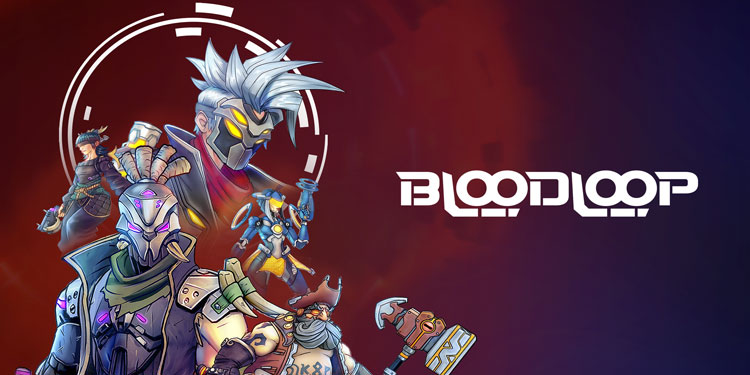
BloodLoop, the competitive hero shooter built by Swiss studio Ragnarok Games, entered early access via the Epic Games Store on 23 June, accompanied by a collection of exclusive digital assets created in partnership with Avalanche and OpenSea. The developer positioned the release as a response to players seeking high-speed action, tactical depth and genuine control over in-game items, while emphasising that blockchain participation remains strictly optional.
Futuristic factions replace planetary war with virtual sport
Set in a distant future, the title pits three rival factions against each other inside a virtual arena that has supplanted open warfare. Each hero, according to studio explanations, is the result of the enigmatic “BloodLoop” process that fuses human blood with exotic matter, granting combatants supernatural abilities. At launch the roster features five playable characters, and the maps total four, offering a foundational mix of environments and play styles.
Players can choose from three core modes. “Energy War” revolves around coordinated efforts to capture and defend energy nodes; “Team Deathmatch” presents a ten-player, score-based firefight; and a solo “Free-for-All” challenges individuals to outlast every opponent. Studio co-founder Pasquale Finiello indicated that the team aimed to refresh a genre often viewed as troubled, claiming the game introduces novel ideas covering both moment-to-moment gameplay and the way items function.
Optional blockchain features promise tradable cosmetics
Ragnarok Games clarified that its Avalanche integration does not influence moment-to-moment battles, but instead offers Web3 enthusiasts the chance to mint and trade cosmetic items, such as the limited-edition “Artist Print” skin. Management argued that blockchain support delivers genuine ownership without compromising balance, polish or competitive integrity. A built-in player-to-player marketplace is expected to go live later in the year, facilitated by OpenSea’s infrastructure.
BloodLoop launches today on Epic Games.
Built on Avalanche and powered by $BLS, @BloodLoopGAME is one of the most action-packed, competitive, and just plain fun games to come out of web3.
Just 3 hours ahead of launch, they’ve already smashed through 200,000 mints for the Artist… pic.twitter.com/INJAfIWBq6
— Avalanche🔺 (@avax) June 23, 2025
Content pipeline mapped out through the end of next year
The studio published a roadmap extending into 2025. July is scheduled to introduce a new hero named Titus, a fresh map titled Skyve City, a Quest system, a Season Pass and Daily Streak rewards. September should bring another character known as Shaman, the Seraphic Tower battleground, an Auction House for secondary trading, a Mastery progression layer and the long-awaited Ranked queue. December is earmarked for two additional environments—Bahmin Ruin and an as-yet-unnamed eighth map—alongside full controller support. Future updates are set to add further heroes, maps and competitive features.
Esports-ready debut backed by play-to-airdrop incentives
Season One, which lasts one month, launches with a play-to-airdrop tournament designed to foster an esports mindset from day one. Entry requires the purchase of a 99.99 USD pass denominated in the game’s native BLS token. Seventy-five percent of pass revenue feeds directly into the prize pool, guaranteeing an initial 15,000 USD and allowing expansion to as much as 130,000 USD depending on participation. Rankings rely on an internal matchmaking-rating system, and the top twenty percent of competitors will share in the rewards, a structure the developer believes balances meritocracy with inclusivity.
Funding and platform traction
BloodLoop has been in development since 2021 and raised 4 million USD in seed funding in March 2024. Prior to launch it secured a place among the thirty most-wish-listed titles on Epic Games’ marketplace, signalling healthy community interest. Ragnarok Games regards these milestones—combined with its roadmap, optional Web3 layer and early esports push—as evidence that the project can overcome the difficulties that have plagued many recent hero shooters and carve out a sustainable audience.