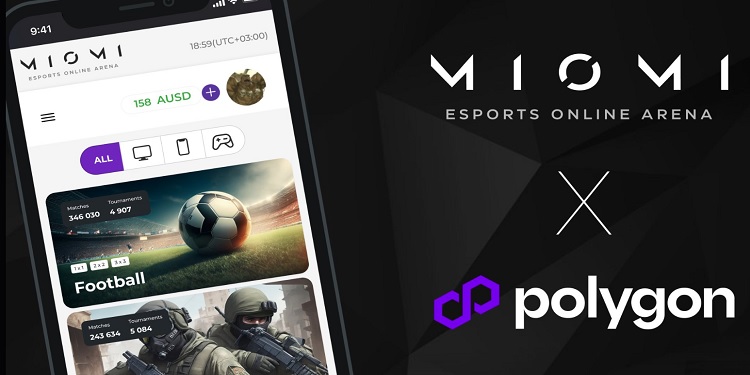
Miomi Game, a blockchain-based esports platform, has introduced stablecoin rewards through the Polygon network, allowing players to claim prizes in Agora’s AUSD. The announcement was made on August 15, 2025, via the company’s official social media channels. The move is viewed as a strategic step to expand Web3 gaming access while leveraging Polygon’s scalability and low transaction costs.
This development follows Miomi’s earlier partnership with Fortify Labs, which launched Etherlink, a layer-2 solution built with Tezos and compatible with the Ethereum Virtual Machine. The collaboration marked an important milestone in widening the platform’s user base and opening opportunities in new markets. With these partnerships, Miomi has been positioning itself as a multi-purpose esports ecosystem that caters not only to professional competitors but also to casual gamers seeking crypto-based rewards.
Polygon brings speed, stability, and affordability
By integrating AUSD into Polygon, Miomi gains a number of advantages critical for gaming operations. Polygon’s fast settlement speeds and low fees make it suitable for esports, where seamless transactions are essential. Now, players can win and redeem AUSD prizes directly after matches and tournaments. Unlike volatile cryptocurrencies, the stable value of AUSD provides consistent and predictable rewards, which is an attractive feature for gamers who look for stability in their earnings.
Miomi’s platform currently offers multiple esports options, including popular sports titles and tactical shooter games, as highlighted in its promotional campaigns. Participants can compete in matches or large-scale tournaments with thousands of players. Prize pools, often displayed publicly—such as rewards totaling 158 AUSD—serve as additional motivation for wider engagement. This structure, combining diversity of choice and transparent incentives, continues to draw a growing number of players into the Web3 gaming space.
Riding the esports and blockchain growth wave
The global esports market is experiencing rapid growth, with analysts projecting its value to reach over $2 billion in 2024, partly driven by the emergence of decentralized gaming models. Miomi is capitalizing on this momentum by offering tokenized rewards backed by blockchain technology. The integration of secure, traceable transactions strengthens the platform’s reputation in an increasingly competitive industry.
Miomi Game is now integrated with Polygon for fast, low-cost, and secure transactions.
Players can create and join matches using AUSD on the Polygon network. https://t.co/iLfnazhxKe
— Polygon (@0xPolygon) August 15, 2025
The partnership with Polygon enhances Miomi’s infrastructure by improving scalability and lowering transaction costs, making the platform more accessible to a global audience. Company insiders indicated that new features such as leaderboards, special events, and enhanced community-driven activities are expected in the near future to further increase user engagement.
Stablecoins as a catalyst for adoption
The introduction of AUSD is also reflective of a wider trend in the adoption of stablecoins in the digital economy. Unlike highly volatile assets such as Bitcoin, AUSD offers stability that appeals both to players and potential sponsors. Gamers can use their winnings for in-game purchases or exchange them into other currencies, while the predictable value of AUSD makes it more attractive for brands and investors looking to enter blockchain-based esports.
Market watchers suggest that the move strengthens Miomi’s competitive position by aligning with global trends in Web3 adoption. The combination of Polygon’s efficiency, AUSD’s stability, and the platform’s diversified offerings positions Miomi to capture significant growth opportunities in the years ahead.
A milestone for blockchain-powered esports
The integration of AUSD rewards on Polygon marks a major milestone for Miomi Game. By blending partnerships with Fortify Labs and Polygon, the company has reinforced its strategy of scaling operations and extending its global reach. Industry observers view this development as further evidence of the growing potential of Web3 gaming, where stablecoin rewards and scalable blockchain networks are likely to define the next stage of esports evolution.