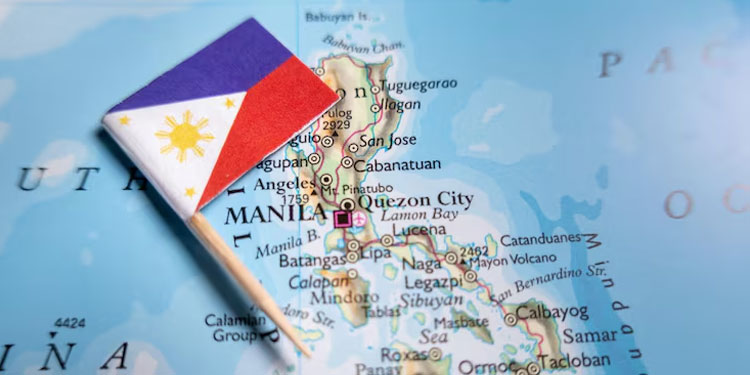
Philippine Senator Bam Aquino has outlined an ambitious vision to place the country’s entire national budget on blockchain, with the goal of making every peso spent traceable to citizens. The proposal, if implemented, would set the Philippines apart as the first nation to undertake such a measure and would represent a significant leap in the growing global exploration of blockchain for governance.
During the Manila Tech Summit on August 27, Aquino suggested that putting the national budget on blockchain would radically improve transparency and public accountability. He acknowledged that governments have traditionally been hesitant to adopt systems where every transaction is permanently recorded and visible to the public, but stressed that the Philippines was ready to begin experimenting with this approach. Aquino further emphasized that adopting this system would make the country the first to place its entire budget on-chain.
At present, however, no formal legislative proposal has been filed to establish a blockchain-powered budget management system in the Philippines.
Building on recent blockchain initiatives
Aquino’s vision comes at a time when the Philippines has been increasingly exploring blockchain and cryptocurrency-related innovations. Just days earlier, Congressman Miguel Luis Villafuerte introduced a bill seeking to create a Strategic Bitcoin Reserve. The proposal aims to accumulate 10,000 BTC over a five-year period, with the reserve locked for two decades. Villafuerte explained that the growing importance of Bitcoin in ensuring financial and economic strength made it necessary for the country to take decisive legislative steps. If enacted, the measure would position the Philippines as one of the first Asian nations to formalize a sovereign Bitcoin reserve.
These initiatives reflect a broader national interest in leveraging blockchain technology for both financial management and governance, signaling the Philippines’ intent to take a pioneering role in the region.
Challenges and global comparisons
While the proposal to put the entire national budget on blockchain is groundbreaking, experts caution that it remains highly ambitious. The Department of Budget and Management has already been testing blockchain to track financial documents, yet scaling this pilot into a full budgetary system would require significant technological infrastructure, regulatory alignment, and political commitment.
Globally, governments have experimented with blockchain adoption but mostly in narrower applications. Estonia has been using blockchain to secure government databases and protect public records, while Georgia has implemented blockchain for land registries as a means to reduce corruption. Brazil has piloted blockchain-based systems to enhance transparency in public procurement. Despite these developments, no country has yet succeeded in fully migrating its national budget onto a blockchain.
The possibility of exposing every peso—or, in broader terms, every unit of public spending—to complete public scrutiny raises both practical and political questions. Whether the Philippines or any other nation is prepared for such radical transparency remains uncertain.
A potential milestone in digital governance
Aquino’s idea is viewed as a bold step that, if realized, could redefine how governments manage public resources. It underscores the increasing relevance of blockchain in not only financial markets but also in governance models that seek to strengthen accountability and trust.
The proposal also adds momentum to ongoing discussions about how digital technologies can reshape state functions. While hurdles remain, the Philippines’ exploration of both blockchain-based budgeting and a sovereign Bitcoin reserve indicates a willingness to test innovative solutions in public finance.