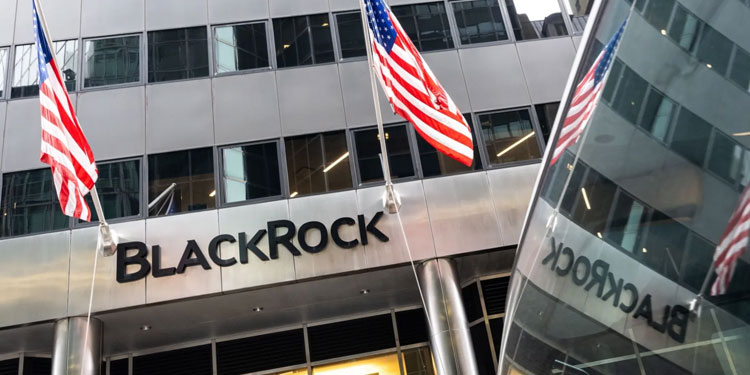
BlackRock’s alignment with the Depository Trust & Clearing Corporation (DTCC) as blockchain validators marks a significant development in the integration of digital assets with traditional financial infrastructure. The move highlights the growing role of established financial institutions in building and validating blockchain-based settlement systems as stablecoins gain broader use across payments and capital markets.
The development was highlighted in a social media post by Fireblocks, which pointed to the participation of BlackRock and DTCC in Circle’s Arc initiative. The involvement of two major financial infrastructure players suggests that blockchain networks are increasingly being positioned as components of mainstream financial market infrastructure rather than as standalone systems for cryptocurrency trading.
BlackRock and DTCC’s participation as validators strengthens the institutional foundation of Circle’s Arc and signals a broader move toward blockchain-based settlement infrastructure for traditional financial markets.
The development comes as financial institutions continue exploring ways to move transactions onto blockchain networks while maintaining established standards for security, compliance, and settlement. Circle’s Arc initiative is part of that broader transition, with BlackRock and DTCC taking roles in validating activity on the network.
Tokenized deposits add to on-chain settlement momentum
The shift is also occurring alongside developments in tokenized banking infrastructure. The Clearing House has implemented a tokenized deposit interoperability layer, adding another component to the emerging ecosystem for blockchain-based financial transactions.
Tokenized deposits and stablecoins are increasingly being examined as mechanisms that could make payments and settlements faster and more programmable. Their integration with established financial infrastructure could allow institutions to use blockchain technology while retaining familiar mechanisms for managing financial assets and obligations.
The combination of stablecoin networks, tokenized deposits, and institutional validators could eventually create a more interconnected settlement environment. Such systems may reduce friction between financial institutions and enable transactions to be processed with greater automation.
The trend also comes as stablecoin adoption expands. Reports indicated that the number of active stablecoin wallets reached about 75 million in September, underscoring the growing scale of participation in blockchain-based payment infrastructure. While wallet counts do not necessarily represent individual users, the metric provides an indication of increasing activity across digital-asset networks.
Institutional participation reshapes digital asset infrastructure
BlackRock has become one of the largest traditional investment managers to embrace blockchain-based financial applications. Its involvement in digital assets has expanded the role of blockchain technology within conventional investment and financial-market structures.
DTCC, meanwhile, plays a central role in clearing, settlement, and related post-trade processes for securities markets. Its participation in blockchain validation therefore carries significance beyond the cryptocurrency sector because it connects distributed-ledger technology with infrastructure that supports traditional financial markets.
For financial institutions and developers, the emergence of institutional validators could provide greater confidence in blockchain settlement systems while supporting more secure, scalable and interoperable applications.
Market participants are expected to monitor whether these infrastructure initiatives translate into wider adoption. The reliability of on-chain settlement, the ability of networks to handle institutional transaction volumes and the integration of regulatory requirements will remain important factors in determining their long-term viability.
Stablecoin market faces closer scrutiny
The broader cryptocurrency market has continued to show mixed momentum across major assets, leaving traders cautious about the direction of digital assets. However, infrastructure developments involving major financial institutions are increasingly being viewed separately from short-term market movements.
September moved fast for stablecoin infrastructure.
Card settlement went on-chain. BlackRock and DTCC became blockchain validators. The Clearing House got its tokenized deposit interop layer.
Edition #11 of Stablecoin Signals:
▶️ A $25B card program live on stablecoin settlement via Mastercard
▶️ Circle launches Arc with BlackRock, DTCC, ICE, Mastercard, Standard Chartered as validators
▶️ The Clearing House picks Quant for tokenized deposit interop
▶️ Clarity Act fails cloture 49-50, stays on the calendar
▶️ 75M monthly active stablecoin wallets in September, a new recordFull edition: https://t.co/nARUIOub41
— Fireblocks (@FireblocksHQ) October 5, 2026
The reported stability of BlackRock-related offerings also suggests that the immediate market reaction has not produced significant price volatility. Investors are likely to focus instead on whether institutional blockchain projects can generate measurable improvements in settlement efficiency and financial-market connectivity.
A reported $25 billion card program involving major payments participants, including Mastercard, adds another dimension to the expansion of blockchain-enabled financial services. Its performance could provide additional insight into how digital-asset infrastructure is being incorporated into consumer and institutional payment systems.
The combination of institutional validation, tokenized deposits, and expanding stablecoin usage could accelerate the transition from experimental blockchain applications toward regulated, on-chain financial infrastructure.
Regulatory developments will remain critical as these initiatives progress. Clear rules governing stablecoins, tokenized deposits, custody, and blockchain-based settlement could influence how quickly financial institutions expand their use of the technology.
For traders, developers and financial institutions, the BlackRock-DTCC involvement represents a development worth watching as blockchain infrastructure moves closer to the core of traditional financial markets.