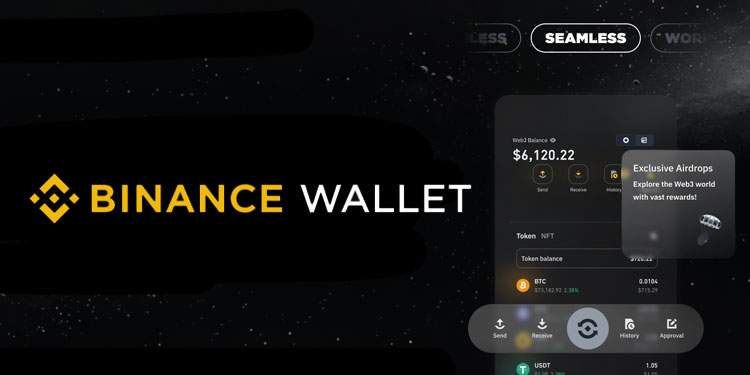
Binance has introduced its Web3 Wallet API, a new infrastructure solution designed to provide developers, institutions, and advanced traders with streamlined access to decentralized markets. The launch is aimed at simplifying how builders connect to on-chain trading environments by offering a single integration point for trading, token swaps, and market data across multiple blockchain networks.
The company’s latest offering seeks to address a common challenge in the Web3 sector, where developers often need to manage multiple integrations and infrastructure components to access liquidity, pricing information, and transaction execution across different chains. By consolidating these functions into one interface, Binance aims to reduce development complexity while expanding access to decentralized finance opportunities.
Unified Access to Market Data and Trading Routes
According to Binance, the API provides partners with free real-time market data, including token pricing information and on-chain liquidity insights. This allows developers and institutions to access critical trading information without operating their own extensive infrastructure.
The platform also aggregates swap quotes from connected decentralized exchanges and blockchain bridges. As a result, users can submit a single trade request and receive what Binance identifies as the most competitive available execution route. The API is built on top of the Binance Web3 Wallet infrastructure, enabling supported users to connect wallets, sign transactions, and submit trades through the same integration.
The Web3 Wallet API combines real-time market data, aggregated swap routing, and transaction execution into a single multi-chain interface, simplifying access to decentralized markets.
Compatibility Designed to Reduce Integration Barriers
A notable aspect of the new API is its compatibility with widely used Web3 connectivity standards. Rather than requiring developers to adopt a proprietary software development kit, Binance has designed the solution to work with established methods already used across decentralized applications.
The company indicated that decentralized applications supporting WalletConnect v2 or EIP-1193-injected providers can integrate with Binance Web3 Wallet without significant modifications. This approach is intended to lower technical barriers for existing decentralized finance platforms and accelerate adoption among developers seeking efficient blockchain connectivity.
Broad Multi-Chain Coverage Expands Reach
The Binance Web3 Wallet already supports a diverse range of blockchain ecosystems, including Ethereum Virtual Machine (EVM)-compatible networks, Bitcoin, Solana, Sui, Cosmos, Aptos, TON, and Tron. Through the new API, this broad network support becomes available to partners through a single interface.
Introducing #Binance Wallet Web3 API, enabling developers, institutions, and advanced traders to access on-chain trading and market data through a single integration.
Access:
📊 Free real-time market data
🔄 Competitive aggregated swap quotes
⛓️ Multi-chain support (EVM &… pic.twitter.com/fAPmso0nHr— Binance Wallet (@BinanceWallet) June 17, 2026
The API extends Binance’s multi-chain infrastructure across major blockchain ecosystems, enabling developers and institutions to access quotes and route transactions through one connection point.
The unified structure can benefit trading platforms, quantitative trading firms, and liquidity aggregators by eliminating the need to maintain separate wallet connections and integrations for different blockchain networks. This may help improve operational efficiency while reducing infrastructure complexity.
Security and Institutional Accessibility
Security remains a key component of the offering. Binance highlighted that its wallet infrastructure utilizes multi-party computation (MPC) technology for managing cryptographic keys. Under this model, private key material is divided into multiple shares, ensuring that no single device possesses a complete private key.
For institutional participants, this architecture is designed to support internal security requirements while enabling direct participation in on-chain trading activities. Binance also combines this framework with continuous monitoring capabilities intended to strengthen operational security.
Supporting Developers and Advanced Users
In addition to the technology itself, Binance is providing ongoing technical support through its existing developer channels, documentation resources, and dedicated assistance services. The company stated that the API is intended to serve a broad range of users, including decentralized applications integrating swap functionality, institutions seeking access to liquidity, and sophisticated traders building custom trading systems.
By offering a single gateway for market data, liquidity access, wallet connectivity, and transaction execution, Binance aims to accelerate Web3 development and streamline multi-chain trading operations.
The launch underscores Binance’s continued efforts to simplify blockchain infrastructure while making decentralized markets more accessible to developers, enterprises, and advanced market participants.