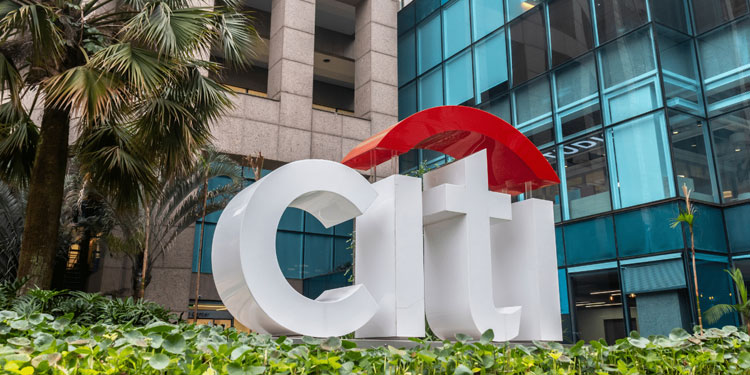
Citigroup has entered a collaboration with US crypto exchange Coinbase to explore the use of stablecoins for corporate payments, in what is being viewed as another marker of Wall Street’s advancing shift toward blockchain-based settlement rails. With roughly 2.5 trillion dollars under management, the bank is positioning the initiative as a way to streamline fund transfers that span traditional bank accounts and digital asset environments.
The effort is directed at Citigroup’s institutional clients, who are seeking payment paths that perform with greater speed and flexibility than conventional correspondent networks. Debopama Sen, who oversees payments within the bank’s Services unit, confirmed the push in an interview, stating that the team is building stablecoin-based mechanisms to help enterprises move money more efficiently across environments.
Stablecoins seen as a programmable 24/7 rail
Sen conveyed that corporate users are increasingly asking for programmable, conditional, and always-on payments. She noted that legacy banking systems close outside business hours and can require days to complete settlement, whereas stablecoins can clear transactions in near real time at any hour. This property, she argued, makes them suitable for workflows that cannot tolerate downtime or calendar delays.
The stablecoin initiative aligns with a broader digital-asset build-out inside Citigroup. The bank recently rolled out a blockchain system that lets clients move tokenized deposits instantly. It has also been studying custody of crypto exchange-traded funds and stablecoins as part of a multiyear strategy to embed distributed-ledger technology into core payment and securities services.
We’re collaborating with @Citi to build the future of payments.
→Exploring making it easier for Citi clients to use digital assets
→Unlocking the power of stablecoins for payments
→Improving on and off-rampsTime to make digital assets an integral part of the global economy. pic.twitter.com/jGaTZ8wPRf
— Coinbase 🛡️ (@coinbase) October 27, 2025
Sen characterized stablecoins as a key enabler for the emerging digital payments stack, maintaining that they can extend global reach and serve as scaffolding for next-generation financial services. Bank leadership views the move as consistent with a macro trend in which clients now expect higher speed, reliability, and configurability in treasury functions.
Coinbase extends its institutional footprint
For Coinbase, the partnership reinforces its growing role as an infrastructure provider to large financial institutions. The exchange already serves more than 250 banks and capital markets firms with tooling for crypto execution, staking, and payments. Brian Foster from Coinbase said the company has engineered dedicated institutional systems designed to abstract operational complexity and make blockchain rails consumable by regulated entities. He framed the Citigroup pact as further evidence that practical use of stablecoins in real-world payment settings is now accelerating.
Market strategists at Citigroup, including Ronit Ghose, have projected that the stablecoin sector could exceed one trillion dollars within five years, implying that early integration may offer a competitive edge as adoption curves steepen. Analysts argue that if institutions normalize stablecoin rails for treasury and settlement, it could compress settlement cycles, widen liquidity access, and harden the business case for tokenized finance.
Industry observers interpret the Citigroup-Coinbase tie-up as a signal that major banks are no longer viewing blockchain as an experimental perimeter technology but as a candidate to re-platform core money-movement functions. The collaboration is expected to test whether stablecoin infrastructure can meet the compliance, scale, and uptime expectations of global corporates — and, if so, whether it will catalyze a broader re-architecture of cross-border payments in the institutional market.