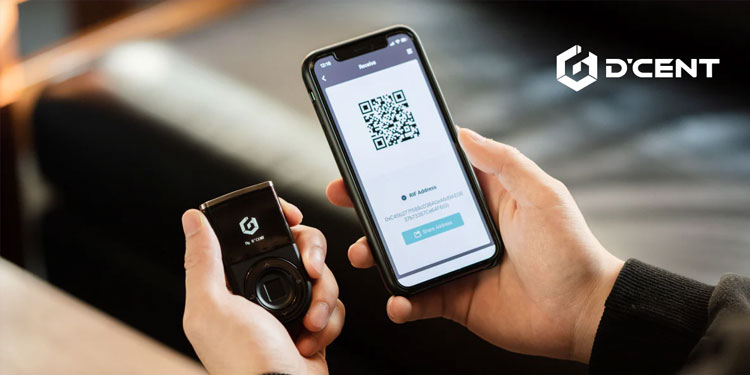
D’CENT Wallet, a widely used biometric authentication cold wallet, has rolled out a new feature called GasPass, designed to make blockchain transactions possible without requiring users to hold native gas tokens. The development marks an effort to bring Web3 usage closer to the simplicity of traditional digital payments, where transaction costs are less visible to consumers.
The announcement highlights how blockchain’s transaction fee system often creates friction for users. Similar to how banks charge processing fees when money is transferred, blockchains rely on gas fees to compensate validators who secure the network. However, unlike banking systems where fees are automatically deducted in local currency, blockchain networks require payments in their own native tokens. Ethereum, for example, requires ETH, while Solana requires SOL.
This requirement has created recurring obstacles for everyday users, particularly those unfamiliar with managing multiple assets.
Problems with gas fees in current systems
The dependence on native tokens has led to three major challenges. First, transactions fail if a user does not hold the required gas token, regardless of how many other tokens may be in the wallet. Second, during times of high congestion, especially on networks like Ethereum, gas fees can rise dramatically, turning even small transfers into expensive processes. Third, in a multi-chain environment, users are forced to hold different gas tokens for every blockchain they engage with, ranging from ETH on Ethereum to BNB on BNB Chain.
These recurring problems discourage new participants and act as a barrier to broader Web3 adoption. For many, the inconvenience of acquiring and holding multiple gas tokens makes blockchain services less appealing compared to conventional digital payment systems.
GasPass: removing the friction
GasPass seeks to solve these challenges by making network fees invisible to the end user. When activated, the D’CENT Wallet automatically handles gas fees on behalf of the user, allowing transactions to proceed without requiring native tokens. Whether sending tokens, swapping assets, or purchasing NFTs, users can complete their activities without worrying about holding ETH, SOL, or other network-specific assets for fees.
Gas fees.
The pain every crypto user knows.
But what if the doctor D'CENT had a cure? 👨⚕️🩺
👉 To be continued… pic.twitter.com/XKxeEiMuRg
— D'CENT Wallet (@DCENTWALLETS) September 8, 2025
The service does not involve complicated settings or extra steps. Users interact with their assets as they normally would, while the wallet ensures that fees are covered in the background. This creates a seamless experience that mirrors the ease of regular financial applications.
Toward mainstream adoption of Web3
What distinguishes GasPass from temporary promotions is its sustainable design. D’CENT Wallet has positioned the feature as a long-term solution to simplify blockchain use, not as a limited-time offer. By effectively removing gas fees from the user experience, the company aims to make digital assets more accessible and convenient for everyday users.
Industry observers view such innovations as essential for driving Web3 into the mainstream. While blockchain technology promises decentralization and ownership, the complexity of managing gas tokens has been one of the major deterrents for adoption. By abstracting away this friction, D’CENT Wallet’s GasPass feature could play a role in bridging the gap between blockchain technology and user-friendly digital payment systems.
If widely adopted, this approach may also inspire other wallets and platforms to rethink how they handle transaction costs, potentially leading to an ecosystem where blockchain services operate with the same simplicity that users expect from traditional finance apps.