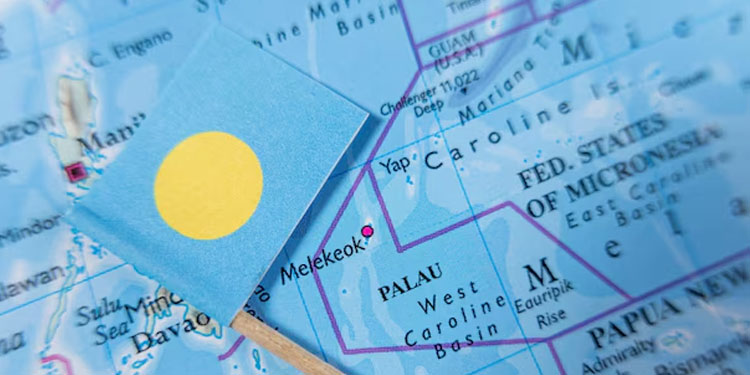
Palau’s financial system appears stable on the surface, supported by profitable banks, solid deposit levels, and broad access to basic banking services. However, a recent assessment by the International Monetary Fund indicates that this stability masks deeper structural challenges. The IMF’s analysis suggests that a large share of domestic savings is not being channeled into Palau’s local economy, limiting the financial sector’s contribution to growth and development.
The banking market is dominated by three U.S. Federal Deposit Insurance Corporation–insured branches that collectively hold nearly all deposits. Rather than deploying these funds locally, the banks reportedly transfer most of the capital to their overseas headquarters, where it is invested in larger and more liquid markets. This practice has contributed to persistently low levels of domestic lending. According to the IMF, private sector credit in Palau accounts for only about one-quarter of gross domestic product, placing it among the lowest ratios in the Pacific Island region.
Constraints on Business Lending
Commercial banks in Palau primarily focus on unsecured personal loans, while lending to businesses remains limited. This structure has constrained the growth potential of small and medium-sized enterprises that rely on external financing to expand operations. The IMF identified several long-standing factors behind weak business lending.
One major constraint is the legal ceiling on interest rates. Commercial lending rates are capped at the U.S. prime rate plus four percentage points. In a small market perceived as higher risk, this restriction reduces banks’ incentives to extend credit to businesses. Limited access to reliable financial information further complicates lending decisions. Many small firms lack audited financial statements, making credit risk assessments difficult. In addition, U.S. bank branches typically require borrowers to demonstrate a U.S. credit history, a condition that many local entrepreneurs cannot meet.
Collateral requirements also present obstacles. Land ownership laws restrict who can hold title, and communal land systems complicate asset recovery in the event of default. As a result, banks often avoid secured lending, reinforcing their reliance on unsecured consumer loans.
Role of the National Development Bank
The National Development Bank of Palau has partially filled the financing gap. It concentrates on housing, small business development, agriculture, and fisheries, and currently provides roughly half of all domestic private sector credit despite its smaller balance sheet. However, the development bank does not accept deposits and depends on government allocations and external funding sources, which limits its overall lending capacity.
Payment System Inefficiencies
Palau uses the U.S. dollar and lacks a domestic payment system, relying instead on U.S.-based banking infrastructure for clearing and settlement. This dependence results in slow check processing times and high costs for cross-border transfers. Cash and checks remain the dominant payment methods, even though mobile phone usage is widespread. Digital payments have yet to gain significant traction, and financial services remain concentrated in the capital, leaving residents of outer islands with limited access.
The IMF suggested that modernizing payment infrastructure could reduce transaction costs, improve speed, and expand financial inclusion across the country.
Exploring Digital Finance Solutions
In response, Palau’s government has begun exploring financial technology initiatives. One proposal under consideration is the Palau Savings Bond, a blockchain-based retail bond intended to offer citizens a new savings vehicle. Funds raised through the bond would be directed toward housing, infrastructure projects, and small business financing via the development bank.
Another proposal involves a government-backed tokenized dollar designed to function as a digital version of the U.S. dollar, fully supported by reserves and issued by the Ministry of Finance. A pilot program has already tested this concept among government employees. Officials believe such initiatives could lower transaction costs, enhance payment efficiency, and encourage more capital to circulate within the domestic economy.
Risks and IMF Recommendations
While acknowledging the potential benefits of digital finance, the IMF cautioned that these innovations carry significant risks. Operating blockchain-based platforms requires robust cybersecurity frameworks, clear legal foundations, and effective regulatory oversight. Without these safeguards, the system could be exposed to money laundering, fraud, or broader financial instability.
The IMF expressed particular concern about the tokenized dollar, noting that reliance on government reserves could introduce fiscal risks if reserve management proves inadequate. The absence of a central bank further complicates governance and oversight arrangements.
As a result, the IMF recommended prioritizing foundational reforms before scaling digital initiatives. These include strengthening credit information systems, reassessing the interest rate cap, clarifying land collateral rules, and enhancing financial supervision. Developing a comprehensive national payment strategy was also identified as a critical prerequisite.
For Palau, the path toward financial modernization presents both opportunity and risk. The IMF’s assessment suggests that technology could help unlock domestic capital and support economic growth, but only if reforms are carefully sequenced and supported by strong institutions and risk management frameworks.