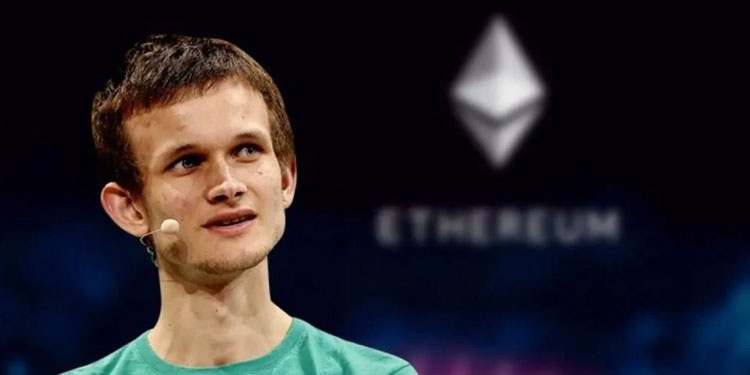
Ethereum co-founder Vitalik Buterin has stated that the network has effectively addressed the long-standing blockchain trilemma through the deployment of zero-knowledge virtual machines and advanced data-handling mechanisms. He explained that these developments mark a structural breakthrough rather than a theoretical improvement, as the technologies are already functioning in live environments. At the same time, he cautioned that achieving full security maturity will take several more years of development and testing.
Buterin shared that the integration of zero-knowledge Ethereum Virtual Machines, commonly referred to as ZK-EVMs, alongside Peer Data Availability Sampling, known as PeerDAS, represents a foundational evolution in Ethereum’s architecture. According to his assessment, this combination allows the network to move closer to balancing decentralization, security, and scalability, which has historically been difficult to accomplish simultaneously in blockchain systems.
Understanding the Blockchain Trilemma Shift
The blockchain trilemma describes the challenge of achieving decentralization, strong security, and high data throughput at the same time. Buterin indicated that Ethereum’s latest progress demonstrates that this challenge has been overcome through working implementations rather than academic design. He noted that PeerDAS is already live on Ethereum’s mainnet, while ZK-EVMs have reached a level of performance suitable for early production use.
PeerDAS alters how Ethereum ensures data availability by enabling validators to verify only small, randomly selected portions of block data instead of downloading entire blocks. This approach significantly reduces bandwidth requirements while maintaining network integrity. Meanwhile, ZK-EVMs allow transactions to be verified efficiently without revealing underlying data, which enhances both privacy and scalability.
Buterin compared the updated Ethereum design to a distributed data-sharing system combined with consensus, contrasting it with earlier blockchain models that prioritize decentralization but struggle to process large volumes of data efficiently.
Roadmap Extends Through the End of the Decade
Despite the progress, Buterin outlined a multi-year roadmap that stretches through the end of the decade. He indicated that increases to Ethereum’s gas limits are not expected to begin until 2026. These changes will rely on protocol upgrades that separate the role of transaction proposers from block builders, a shift intended to support higher throughput without sacrificing decentralization.
Now that ZKEVMs are at alpha stage (production-quality performance, remaining work is safety) and PeerDAS is live on mainnet, it's time to talk more about what this combination means for Ethereum.
These are not minor improvements; they are shifting Ethereum into being a…
— vitalik.eth (@VitalikButerin) January 3, 2026
Between 2026 and 2028, Ethereum developers are expected to introduce adjustments to gas pricing mechanisms and modifications to how the network manages state data. These changes are designed to make the protocol more efficient and sustainable as usage continues to grow.
Buterin also clarified that ZK-EVMs will not become the primary method for block validation until sometime between 2027 and 2030. While current implementations have reached production-quality performance, he emphasized that extensive work remains to ensure long-term system safety and reliability.
Security, Decentralization, and Competitive Pressure
A key long-term objective highlighted by Buterin is distributed block building, which would reduce the risk of centralized control over how transactions are assembled into blocks. He suggested that achieving this goal is essential to preserving Ethereum’s decentralized nature as the network scales.
The technical shift comes at a time when Ethereum faces increasing competition from alternative blockchains that offer faster transaction speeds and lower costs. These rivals have placed pressure on Ethereum developers to accelerate the deployment of scalable solutions without compromising the network’s core principles.
Overall, Buterin’s comments reflect cautious optimism. While Ethereum appears to have made decisive progress toward resolving the blockchain trilemma, the path to full security and widespread adoption of these technologies remains gradual. The coming years will be critical as Ethereum works to translate architectural advances into a robust, scalable, and decentralized global platform.