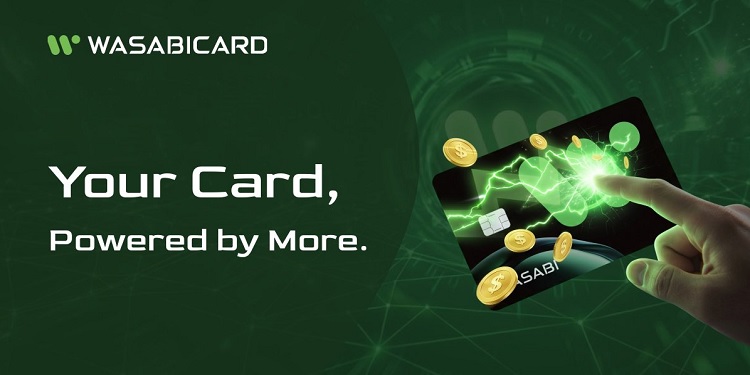
WasabiCard is expanding its payment infrastructure for Web3 businesses seeking to streamline payroll across borders by connecting stablecoin funding with fiat payouts, bank accounts, and card-based spending.
As Web3 companies expand internationally, their workforces are increasingly distributed across countries and time zones. At the same time, corporate treasuries are often managed through stablecoins such as USDT and USDC. This combination is increasing demand for payroll infrastructure that can move funds efficiently while accommodating local payment requirements and compliance obligations.
WasabiCard provides payment infrastructure for enterprises, fintech companies and internet-native businesses. Its platform supports global card issuing, multi-currency settlement, stablecoin funding, embedded payments and cross-border payouts. These capabilities are designed for applications ranging from SaaS subscriptions and media buying to treasury management and global payroll.
Traditional international payroll can involve multiple banks, currencies, payment networks and intermediaries, potentially increasing costs and settlement times. Sending stablecoins directly to an employee wallet also does not fully solve the problem, since workers generally need access to local currency, bank accounts and payment methods for everyday expenses.
WasabiCard is working to connect on-chain stablecoin treasury funds with fiat payment networks, bank accounts and card rails so Web3 companies can manage global payroll through a more unified infrastructure.
Stablecoins become a payroll funding rail
Stablecoins can provide businesses with a payment mechanism that operates around the clock and can facilitate faster cross-border settlement. For companies already holding treasury funds in USDT, USDC and other supported stablecoins, using those assets to fund payroll can bring payroll operations closer to their existing treasury workflows.
However, stablecoin-funded payroll still needs to account for employment, wage-payment and taxation requirements that differ between jurisdictions. Employees also typically need salaries in forms that can be used for rent, purchases, savings and other financial obligations.
WasabiCard is therefore working with regulated partners to combine stablecoin funding with fiat payouts and card payment capabilities. Depending on licensing, jurisdiction, partner availability and applicable product terms, employees can receive funds in supported local currencies through bank accounts held in their own names.
The platform supports payment capabilities across more than 200 countries and regions and more than 30 fiat currencies. Employees can also access funds through virtual or physical cards for online and in-store purchases and, where supported, ATM withdrawals.
Batch payroll aims to simplify international operations
Managing payroll becomes more complex as companies expand from small teams to hundreds of employees across different markets. Individual transfers can require separate integrations and operational processes for each country and currency.
WasabiCard provides a unified API, batch payout functionality, and transaction management tools intended to allow businesses to coordinate payments to multiple recipients and markets through a consolidated system.
The approach could allow Web3 companies and payroll platforms to treat international payroll as a unified fund-distribution process rather than a series of separate cross-border transactions.
Compliance built into payment operations
Cross-border payment efficiency must also be accompanied by appropriate compliance controls. WasabiCard incorporates KYB, KYC, KYT and AML processes across key stages of its payment infrastructure, including business onboarding, identity verification, fund movement and transaction execution.
These controls are intended to support verification and monitoring of businesses, recipients and transactions while enabling stablecoin-funded payments to move through regulated financial channels.
As Web3 companies continue building internationally distributed teams, payroll infrastructure is increasingly required to bridge digital assets and conventional financial services. Stablecoins can facilitate the movement of funds across borders, while fiat payout networks, bank accounts and cards provide employees with practical access to those funds.
By combining these payment rails, WasabiCard is positioning its infrastructure to help Web3 businesses manage global payroll with greater flexibility and scalability while addressing the operational and compliance requirements associated with international payments.
The model is aimed at bridging Web3 treasury operations with the local financial systems employees already use, potentially making stablecoin-funded payroll more accessible for globally distributed teams.