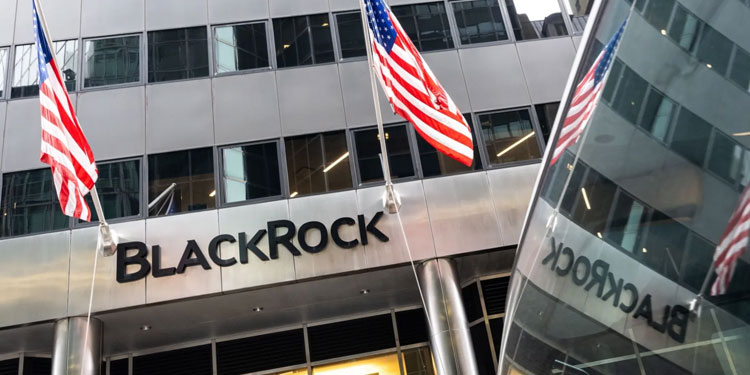
BlackRock, the world’s largest asset management firm, is reportedly examining the possibility of transforming exchange-traded funds into blockchain-based tokens. Industry observers noted that such a shift could reshape one of Wall Street’s most widely used investment vehicles by opening the door to 24-hour trading, improving access for overseas investors, and allowing the instruments to be used more flexibly as collateral in crypto markets.
The firm has already made inroads in the tokenization space through its digital money market fund, known as BUIDL, which has expanded to over $2 billion in assets. Alongside this, its Bitcoin exchange-traded fund has emerged as one of the most widely adopted products in financial market history. Analysts suggested that moving ETFs onto blockchain networks could extend their tradability well beyond the traditional hours of U.S. financial markets, giving international investors a more seamless entry point.
Tokenization as an industry trend
This potential shift is being viewed as part of a broader transformation underway across the financial sector. Tokenization has increasingly been seen as a way to unlock new efficiencies by enabling instantaneous settlement, reducing reliance on intermediaries, and offering fractional ownership opportunities that allow smaller investors to gain exposure to products previously reserved for larger portfolios.
BlackRock’s chief executive, Larry Fink, has long emphasized the transformative capacity of tokenization. In his latest annual letter to shareholders, he reiterated his confidence that blockchain technology could eventually be applied to a wide spectrum of financial assets, ranging from funds and bonds to equities and real estate. Industry participants remarked that his consistent advocacy is pushing other institutions to accelerate their own tokenization experiments.
Regulatory signals and market tests
Although hurdles remain, particularly in aligning settlement systems and coordinating regulatory frameworks across jurisdictions, market conditions appear to be shifting toward a more favorable environment for such innovations. Regulators in the United States have started exploring ways to support controlled blockchain experimentation, signaling a willingness to adapt existing structures to new technologies.
At the same time, Nasdaq has filed applications seeking approval to facilitate trading of tokenized shares. Analysts observed that such a step would represent a critical trial for blockchain adoption within the U.S. equities market. If successful, it could validate the integration of blockchain into mainstream finance and pave the way for ETFs and other investment products to follow.
Implications for global finance
Market experts suggested that tokenized ETFs would carry significant implications for international capital flows. By making these products tradeable around the clock, asset managers could appeal to investors in Asia, Europe, and other regions without requiring them to operate within Wall Street’s limited trading window. Furthermore, the ability to use tokenized ETFs as collateral in decentralized finance and other digital asset ecosystems could open up new opportunities for liquidity management.
As the asset management giant explores this direction, the financial industry is closely watching whether tokenized ETFs can deliver on the promises of efficiency, inclusivity, and interoperability. If realized, the move could mark a pivotal milestone in the ongoing convergence of traditional markets and blockchain-based finance.