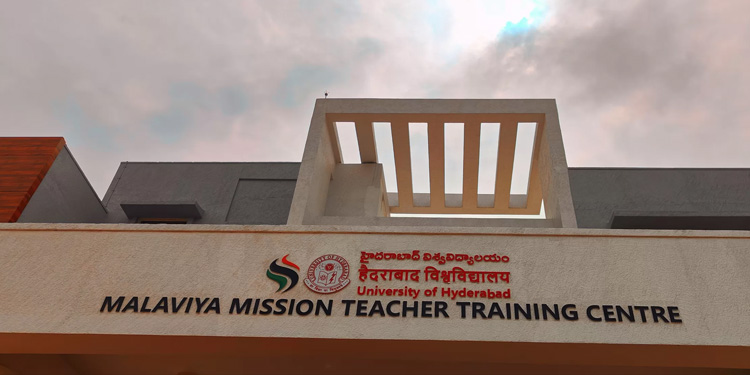
The Malaviya Mission Teacher Training Centre at the University of Hyderabad (India) reported that it has adopted blockchain technology to issue certificates for participants across all its academic and training programs. The institution indicated that this move reflects a broader effort to modernize credentialing practices while improving security, authenticity, and ease of verification. As part of this initiative, MMTTC has partnered with TruScholar, a digital credentialing provider known for issuing blockchain-based academic records, to deliver verifiable digital credentials to program participants.
According to the announcement, the collaboration enables the university to replace conventional paper certificates with digital credentials that are resistant to tampering and fraud. By leveraging blockchain infrastructure, the institution aims to ensure that certificates issued to learners remain authentic, traceable, and permanently recorded in a secure digital environment.
Limitations of Traditional Paper Certificates
MMTTC explained that traditional printed certificates are often vulnerable to damage, loss, and forgery. Verifying such documents typically requires manual checks and direct confirmation from the issuing institution, a process that can be time-consuming and inefficient. In contrast, blockchain-based credentials are issued and stored in a decentralized ledger, which prevents unauthorized alterations and allows real-time verification.
The university emphasized that digital credentials offer a higher level of trust for academic achievements, professional certifications, and skill-based recognitions. Because the records are immutable once issued, stakeholders such as employers, academic institutions, and professional bodies can rely on their accuracy without the need for extensive background checks.
How Blockchain-Based Credentials Work
Under the new system, participants who successfully complete an MMTTC training program receive a digitally verifiable certificate instead of a printed document. These credentials can be downloaded and securely stored by recipients for long-term use. Each certificate contains embedded verification features that allow third parties to confirm its authenticity directly through the blockchain.
The institution noted that verification can be completed online by scanning a QR code included within the digital certificate. This process enables instant validation by the issuing authority without requiring additional paperwork or direct correspondence. As a result, both participants and verifying institutions benefit from a faster and more transparent credential review process.
Global Accessibility and Recognition
MMTTC highlighted that one of the key advantages of verifiable digital credentials is their global accessibility. Because blockchain records are accessible online, credentials can be verified from anywhere in the world at any time. This feature is particularly beneficial for participants seeking academic progression, employment, or professional opportunities beyond regional or national boundaries.
The university stated that digital credentials support broader recognition of achievements by ensuring that records remain consistent and verifiable regardless of geographic location. This approach aligns with the increasing mobility of students and professionals who require reliable proof of qualifications in diverse settings.
Institutional and Participant Benefits
From an institutional perspective, the adoption of blockchain-based certification is expected to reduce administrative overhead associated with printing, storing, and reissuing physical certificates. It also enhances institutional credibility by demonstrating a commitment to innovation, transparency, and data integrity.
For participants, the transition offers greater control over personal academic records. Digital credentials can be easily shared with employers, academic institutions, or professional organizations without the risk of loss or deterioration. The secure nature of blockchain storage also minimizes concerns related to unauthorized duplication or misuse.
A Step Toward Digital Transformation
MMTTC characterized the initiative as part of a broader digital transformation strategy aimed at aligning academic processes with emerging technologies. By partnering with TruScholar, the university positions itself among institutions adopting advanced solutions to address long-standing challenges in credential verification.
Overall, the move to blockchain-based certification reflects a growing recognition within higher education that secure, verifiable, and globally accessible credentials are essential in an increasingly digital and interconnected academic landscape.