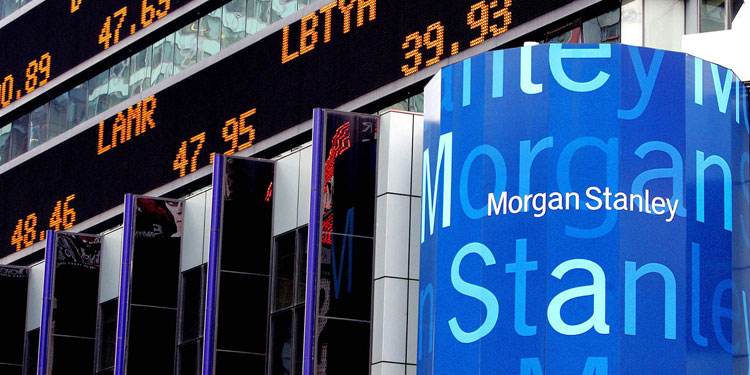
Morgan Stanley has entered a new partnership with Corastone, a blockchain platform backed by KKR, in an effort to bring automation and transparency to the trading of alternative assets such as private equity and hedge funds. The collaboration is part of a growing movement on Wall Street to digitize complex financial transactions using blockchain technology. Major asset managers, including Apollo Global Management and Franklin Templeton, have also joined the initiative, signaling strong institutional support for blockchain-driven modernization of fund operations.
Transforming private fund transactions
Morgan Stanley’s adoption of Corastone’s blockchain platform marks a significant step toward digitizing one of finance’s most paper-heavy processes. Traditionally, trades involving alternative investments rely on extensive documentation and manual verification, often taking several days to settle. Corastone’s system aims to replace these inefficient steps with blockchain-based automation, reducing settlement times and minimizing errors.
The move aligns with the financial industry’s ongoing efforts to streamline back-office operations and enhance efficiency. By migrating alternative fund trades onto blockchain rails, the technology promises faster execution, greater accuracy, and improved recordkeeping across the lifecycle of transactions.
The involvement of major players such as KKR, Apollo, and Franklin Templeton underscores how leading investment firms view digital infrastructure as essential for scaling and securing future fund management operations. Following the announcement, shares of Morgan Stanley, KKR, and Apollo reportedly saw modest gains, rising between 0.8% and 2.3%, reflecting investor optimism about the growing role of blockchain in mainstream finance.
Boosting liquidity in a $13 trillion market
The integration of blockchain technology into alternative asset trading is expected to bring greater liquidity to a sector valued at approximately $13 trillion. These markets—spanning private equity, private credit, real estate, and hedge funds—have traditionally suffered from limited transparency and slow transfer mechanisms.
Automated blockchain settlement could significantly reduce delays and risks associated with manual, paper-based systems. By increasing transaction speed and operational certainty, the system may attract more institutional investors, potentially broadening access to alternative investment vehicles. As liquidity improves, the asset class could become more accessible and dynamic, reshaping how institutions and wealthy investors allocate capital.
A broader shift toward blockchain-driven finance
Morgan Stanley’s latest move is part of a larger transformation taking place across Wall Street. Financial institutions are increasingly turning to distributed ledger technology to streamline operations, cut costs, and enhance transparency. Blockchain’s ability to maintain immutable records and synchronize transactions across multiple parties offers a foundation for rebuilding the financial infrastructure that underpins capital markets.
The benefits extend beyond efficiency. By reducing settlement times and simplifying regulatory reporting, blockchain systems could lower the compliance and operational costs associated with complex asset management. This transition may also pave the way for new standards in regulatory oversight, data integrity, and cross-border fund accessibility.
Analysts suggest that as global financial firms continue digitizing their operations, the ripple effects will likely influence everything from fund governance to investor access. In this evolving environment, institutions that adopt blockchain early may gain a competitive edge through faster service delivery and more transparent fund structures.
Setting a new standard for alternative investments
For Morgan Stanley and its partners, the collaboration with Corastone reflects a strategic effort to modernize how alternative funds are managed and traded. The platform’s blockchain framework could serve as a model for other financial institutions looking to optimize efficiency and accountability in fund administration.
As the financial sector embraces digital transformation, blockchain technology is emerging not just as a back-office upgrade but as a foundational tool for reimagining how global capital flows operate. If successful, initiatives like Corastone’s could redefine investor expectations around speed, transparency, and accessibility in alternative asset markets.