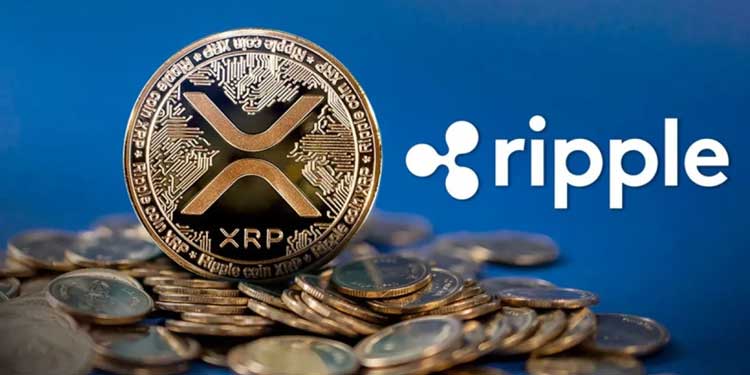
Ripple and BNY are expanding their strategic partnership to strengthen institutional digital asset custody, support stablecoin services, and explore blockchain-based trade finance applications, according to a joint announcement.
BNY Adds XRP and RLUSD Custody Support
BNY, formerly known as The Bank of New York Mellon, has added support for XRP and Ripple USD (RLUSD) to its Digital Asset Custody platform. The development expands an existing relationship under which BNY serves as the primary reserve custodian for RLUSD and provides custody services to Ripple Prime.
The expanded collaboration brings XRP and RLUSD into BNY’s institutional digital asset custody offering, while the bank plans to enable clients to mint and redeem RLUSD directly through its services.
The companies also intend to broaden support for tokenized assets and investment products issued on the XRP Ledger (XRPL), Ripple’s blockchain network. The initiative aims to connect digital assets with established financial infrastructure, potentially making it easier for institutional clients to manage blockchain-based assets alongside traditional financial holdings.
The planned minting and redemption services could provide institutional clients with a direct channel for accessing RLUSD through BNY. Minting involves creating stablecoins in exchange for eligible assets, while redemption allows holders to exchange tokens for the underlying value under the issuer’s applicable terms.
The expansion comes as financial institutions explore ways to incorporate digital assets into regulated custody arrangements and existing payment systems. Institutional custody services are designed to provide secure asset storage, operational controls, and infrastructure for managing digital holdings.
Ripple and BNY Explore Tokenized Trade Finance
Beyond custody, the companies are working to advance tokenized trade finance on the XRPL. They are also exploring a supply chain finance initiative with C2FO, a working capital platform, designed to expand investor access to approved receivables.
Trade finance supports transactions between buyers and sellers by providing funding and payment arrangements linked to the movement of goods and services. Receivables represent payments owed to businesses by their customers, and financing these claims can help companies obtain working capital before invoices are paid.
Tokenization could represent eligible receivables as digital assets, potentially improving the way financial claims are recorded, transferred and managed. Blockchain infrastructure may also help participants coordinate transactions and access information across different systems, although practical benefits will depend on the initiative’s design and implementation.
The proposed trade finance and supply chain finance initiatives aim to extend blockchain applications beyond asset issuance toward the use of tokenized financial claims in payments, liquidity management and collateral arrangements.
Ripple President Monica Long indicated that the industry was moving beyond the initial creation of blockchain-based assets toward making them useful across financial markets, including for payments and collateral.
BNY Chief Innovation and Market Transformation Officer Carolyn Weinberg emphasized the importance of connecting traditional financial systems with blockchain networks. She pointed to the potential for future market infrastructure to link payments, liquidity, collateral, and securities through systems capable of operating continuously.
RLUSD Growth and XRP Ledger Activity
Ripple reported that RLUSD had reached a market capitalization of approximately $2.5 billion. The stablecoin is designed to maintain a value linked to the U.S. dollar and is supported by reserve assets held under its applicable arrangements.
Trade finance is coming to the XRP Ledger!
Today, we’re expanding our collaboration with @BNYglobal across custody and tokenized trade finance, bringing BNY’s institutional scale together with $RLUSD, @XRP and the XRP Ledger.
→ https://t.co/0wOltZclRj https://t.co/3LRULGEuqO
— Ripple (@Ripple) October 27, 2026
RLUSD’s expansion has increased the importance of custody, issuance, and redemption infrastructure for institutions seeking to use the stablecoin in financial transactions. BNY’s role as reserve custodian provides an established connection between the stablecoin and traditional financial services.
The XRPL has processed more than 4.6 billion transactions since its launch, according to the companies. Transactions generally settle in approximately three to five seconds, offering a relatively rapid processing environment for payments and transfers.
These network figures provide context for the proposed institutional applications, although transaction throughput and settlement speed alone do not establish suitability for every financial use case. Security, compliance, liquidity and integration with existing systems will remain important considerations.
BNY Extends Its Institutional Digital Asset Strategy
As of September 30, 2026, BNY oversaw $63.4 trillion in assets under custody and administration and managed $2.2 trillion in assets, according to the announcement.
The expanded relationship positions the bank to explore additional services at the intersection of traditional finance and blockchain technology. For Ripple, the partnership offers a route to expand the institutional use of XRP, RLUSD and the XRPL.
The commercial impact will depend on the rollout of planned minting and redemption services, the adoption of tokenized investment products, and whether the proposed trade finance initiatives advance beyond the exploratory stage.