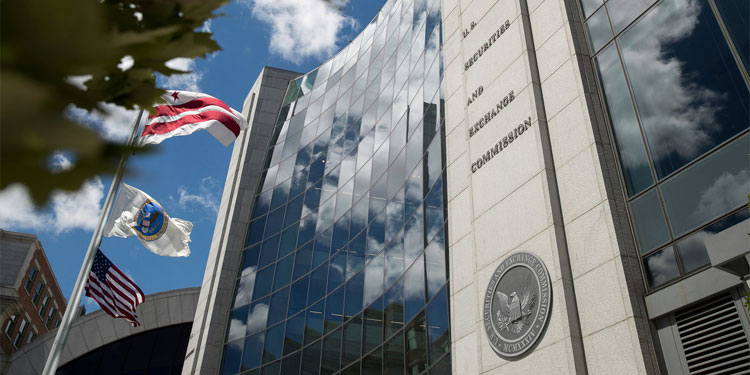
The U.S. Securities and Exchange Commission has created a temporary regulatory pathway for trading tokenized U.S. stocks on blockchain-based venues, marking a significant step toward bringing digital-asset infrastructure into traditional securities markets.
The SEC announced the Innovation Exemption on Sept. 17, allowing eligible Tokenized Securities Venues, or TSVs, to receive temporary relief from the legal definition of an exchange when facilitating trades in certain tokenized National Market System stocks. The agency also provided conditional relief for certain liquidity providers from securities dealer registration requirements. The exemptions are scheduled to remain in effect for five years.
The framework allows eligible venues to facilitate permissioned on-chain trading of tokenized U.S. stocks through automated market makers and liquidity pools, while maintaining conditions designed to protect investors and preserve market integrity.
The move opens a controlled testing environment for blockchain-based equity trading rather than creating a permanent regulatory framework. The SEC is seeking public feedback as it evaluates how the technology operates in live markets and considers whether additional or permanent rules will be necessary.
Tokenized stocks must preserve shareholder rights
Tokenized stocks are digital representations of securities listed on traditional U.S. exchanges. Under the SEC framework, eligible tokens must provide holders with the same rights and privileges associated with the equivalent traditional shares, including dividend and voting rights.
Synthetic tokens that merely track the price of an underlying stock without representing the corresponding security are not covered by the exemption. The SEC also requires platforms to establish permissioned access standards for participants using their trading pools.
Companies also retain the ability to object to third-party tokenization of their shares. Where an unaffiliated party tokenizes a stock, the trading venue must notify the issuer in writing and provide an opportunity for the company to object before making the token available for trading.
The framework places additional limits on the number of securities that can be traded and the volume of transactions. Smart contracts must be auditable, publicly accessible, and deployed on public, permissionless distributed ledgers.
Blockchain could change settlement and trading hours
Traditional U.S. securities markets currently use a T+1 settlement cycle, meaning eligible stock transactions generally settle one business day after the trade. Blockchain-based systems can record transfers of assets and ownership on a shared ledger, potentially reducing settlement times and changing how custody and transaction processing operate.
The technology could also support trading outside conventional market hours and facilitate fractional ownership models, although those features would depend on the structure of individual platforms and future regulatory developments.
The SEC’s framework also requires tokenized trading to stop when trading in the underlying stock is halted on its primary listing exchange. Platforms must disclose information about their operations, trading activity and affiliated entities, while transaction information is subject to transparency and recordkeeping requirements.
By allowing a limited number of blockchain venues to operate under temporary exemptions, the SEC is effectively creating a five-year testing period for on-chain securities trading while collecting data that could shape future capital-market regulations.
Coinbase and Robinhood prepare for tokenized stocks
Coinbase and Robinhood have previously announced plans involving tokenized stock services in the United States, while related offerings have already been developed for markets outside the country. The new U.S. framework could allow financial technology companies to compete for activity in tokenized equities alongside established brokerage firms.
The regulatory development also drew a response from financial markets. Shares of companies involved in securities tokenization and crypto-related trading infrastructure rose after the announcement, reflecting expectations that a regulated pathway could expand demand for tokenization, settlement and custody technology.
🚨 TODAY: The SEC issued an order granting temporary, conditional exemptive relief to Tokenized Securities Venues from the definition of “exchange” in the Exchange Act to trade tokenized NMS stock using innovative permissioned automated market makers and liquidity pools. pic.twitter.com/VDi7Oty2d9
— U.S. Securities and Exchange Commission (@SECGov) September 17, 2026
However, the development also raises questions about market fragmentation. Running the same underlying stocks across traditional exchanges and blockchain venues could divide liquidity between different trading environments. Existing market participants have also raised concerns about whether different regulatory standards could apply to firms performing similar functions.
SEC treats exemption as an experiment
The SEC has emphasized that the exemption is temporary and conditional rather than a permanent approval of tokenized stock markets. The agency intends to collect public comments and examine operational data, investor protection issues, and the broader effects of on-chain securities trading before considering longer-term regulatory changes.
The decision followed the Senate’s failure earlier in the week to advance the CLARITY Act, a broader cryptocurrency market-structure bill backed by President Donald Trump. SEC Chairman Paul Atkins said the agency was using its existing statutory authority to create a temporary bridge toward more durable rules.
The outcome of the pilot will depend in part on issuer participation, trading volumes, liquidity, technology safeguards, and whether investors and market operators demonstrate sustained demand for blockchain-based equity infrastructure.
The SEC’s action therefore represents an opening of the U.S. securities market to controlled on-chain experimentation, while leaving permanent rules and the eventual scale of tokenized stock trading subject to further review.